
How AI-powered EHRs cut no-shows, automate scheduling and billing, and personalize care to boost urgent care patient retention.
AI-powered EHR systems are transforming how urgent care practices retain patients by addressing common pain points like long wait times, missed calls, and administrative inefficiencies. These systems automate tasks such as scheduling, follow-ups, and billing while personalizing patient care through data-driven insights. Here's how they help:
For example, Memorial Hospital at Gulfport cut no-shows by 28% in 7 months, recovering $804,000 in revenue. AI tools like Ottehr integrate these features into a single platform, offering solutions for practices of all sizes with pricing options starting at $0. These systems not only streamline operations but also help practices build stronger patient relationships.

AI-Powered EHR Impact on Patient Retention: Key Statistics and ROI
Urgent care centers often grapple with a familiar issue: half of patient calls go unanswered because front-desk staff are busy assisting in-person visitors. This creates a ripple effect - missed calls lead to unfilled appointments, overworked staff, and frustrated patients. AI-powered EHR systems step in to break this cycle. By automating routine tasks, these systems allow staff to focus on patient care, reducing stress and improving overall efficiency.
The financial toll of inefficiencies in workflows is hard to ignore. Patient no-shows alone cost the U.S. healthcare system a staggering $150 billion annually, with each missed appointment costing clinics around $200. Combine this with the fact that front-desk staff spend 60–70% of their day on the phone managing administrative tasks, and it’s no wonder retention becomes a challenge for many practices.
AI takes the hassle out of scheduling, turning what used to be a tedious back-and-forth process into a streamlined digital experience. Advanced AI systems use historical data - like patient demographics, appointment types, weather patterns, and past behaviors - to calculate a no-show probability score for each appointment. With this data, the system can intelligently overbook time slots just enough to minimize empty chairs without crowding the waiting room.
The results can be impressive. Memorial Hospital at Gulfport, for instance, implemented an AI-driven engagement strategy and saw no-shows drop by 28% in just 7 months. This improvement translated into $804,000 in additional revenue that might have otherwise been lost. Their approach? A 3-step engagement model: an immediate confirmation within 15 minutes of booking, a reminder 48 hours before the appointment with a one-tap rescheduling option, and a final message 2 hours before the visit.
AI also enhances accessibility with voice-based receptionists that operate 24/7. These AI assistants can handle high call volumes and answer common questions like "Do you accept my insurance?" They can even book appointments directly into the EHR, whether it’s 2 p.m. on a weekday or 11 p.m. on a Saturday. This is critical because 67% of patients prefer booking outside regular office hours, and 75% say online rescheduling options would make them more likely to keep their appointments. When cancellations happen, the AI quickly notifies waitlisted patients, filling the slot without requiring hours of manual follow-up.
"AI receptionists in urgent care become far more effective when they have access to scheduling systems and EHR data. Without that context, they can answer basic questions but cannot fully resolve many patient requests." - Damon Finaldi, TeleCloud
AI doesn’t stop at scheduling - it also lightens the administrative workload for clinical teams. Ambient AI scribes, for example, can listen to patient visits and automatically create structured clinical notes. Meanwhile, AI-powered chatbots gather medical history before the provider even steps into the room. These tools can save administrative staff over 25 hours per week, allowing them to focus more on patient interactions.
Billing and insurance processes also benefit from AI. By verifying insurance eligibility before appointments, AI reduces last-minute cancellations. It also slashes billing error rates by up to 70% compared to manual methods, which means fewer claim denials and quicker patient throughput. These improvements not only streamline operations but also help practices retain more patients over time.
AI is transforming healthcare by making patient care more personal, which plays a big role in keeping patients engaged and loyal. Today’s patients expect care that reflects their individual health needs and preferences. AI-powered EHR systems make this possible by analyzing clinical data to create customized treatment plans and personalized communication, which strengthen patient relationships and improve retention.
AI leverages historical data and predictive models to suggest care plans tailored to each patient. For example, diagnostic AI tools can analyze thousands of cases to identify fractures or secondary injuries. Meanwhile, AI chatbots streamline pre-visit processes by conducting interviews that help generate a personalized and efficient history of present illness (HPI). These tools save time for both patients and providers while ensuring accuracy.
AI-powered portals and chatbots provide round-the-clock assistance, handling routine tasks like prescription refills, lab results, and appointment scheduling. This constant availability ensures patients always have access to the support they need.
In May 2025, a national nonprofit implemented conversational AI across more than 50 locations, leading to an 85% reduction in call abandonment rates and saving over 3,000 staff hours each month.
"The AI Contact Center now handles routine requests intelligently, escalates urgent cases appropriately, and integrates seamlessly with our EHR. Our team can focus on complex care while patients get faster responses".
AI also enhances personalization by tapping into EHR data. Instead of generic messages, the system can recognize returning patients and provide relevant follow-ups. For instance, it might say, "Hi Sarah, I see you visited last week. Would you like to schedule your follow-up?". Additionally, these systems can operate in up to 14 languages, including Spanish, Hindi, and Greek, ensuring patients receive care in their preferred language.
These tailored interactions are critical for fostering loyalty and improving patient retention, particularly in urgent care settings.
AI-powered EHR tools are stepping up to not only streamline workflows and personalize care but also to enhance how patients engage with providers and simplify the billing process.
When patient engagement and billing are seamless, trust and loyalty naturally follow. These advanced systems combine telehealth, SMS, and revenue cycle management to create a smoother, more connected patient experience.
Modern EHR platforms now integrate telehealth and two-way messaging directly into clinical workflows. This means patients can easily reach out to their providers - whether it’s for a quick follow-up or to opt for virtual care instead of an in-person visit.
SMS communication is particularly effective because it meets patients where they already spend time: their phones. AI-powered systems use secure SMS links that don’t require downloads or passwords, achieving adoption rates of over 60%. These tools keep patients informed by sharing updates on wait times, lab results, and discharge instructions, which can significantly improve treatment adherence.
What’s more, AI triage tools take patient messaging to the next level by assessing and routing messages based on urgency, 24/7. This reduces delays and ensures patients feel cared for right from the start. For instance, one practice that adopted AI-powered patient engagement saw its Google ratings rise from an average of 2.7 to 4.0 stars. These tools don’t just improve satisfaction - they drive results, with practices experiencing a 20% increase in patient bookings.
While these engagement tools strengthen patient satisfaction, the billing experience plays an equally critical role in retention.
The patient experience doesn’t end after a visit - it extends into the billing process. Confusing or frustrating billing interactions can erode trust, but AI-powered revenue cycle management (RCM) tools are changing the game. These tools automate tasks like insurance eligibility checks, claims submission, and denial management, making the financial side of healthcare more transparent and less stressful.
Automated text-to-pay systems, for example, boast open rates as high as 98% and allow patients to complete payments in under a minute.
"When billing feels easy, patients remember. When it feels hard, they switch." - Jo Galvez, Curogram
Convenience in billing matters - a lot. Research reveals that 80% of patients say billing convenience directly impacts their satisfaction with a provider. Even more compelling, a 10% increase in patient satisfaction can drive a 12% boost in patient retention. By integrating payment options into the same SMS and chat tools patients already use for scheduling, practices eliminate common pain points like navigating portals or resetting passwords.
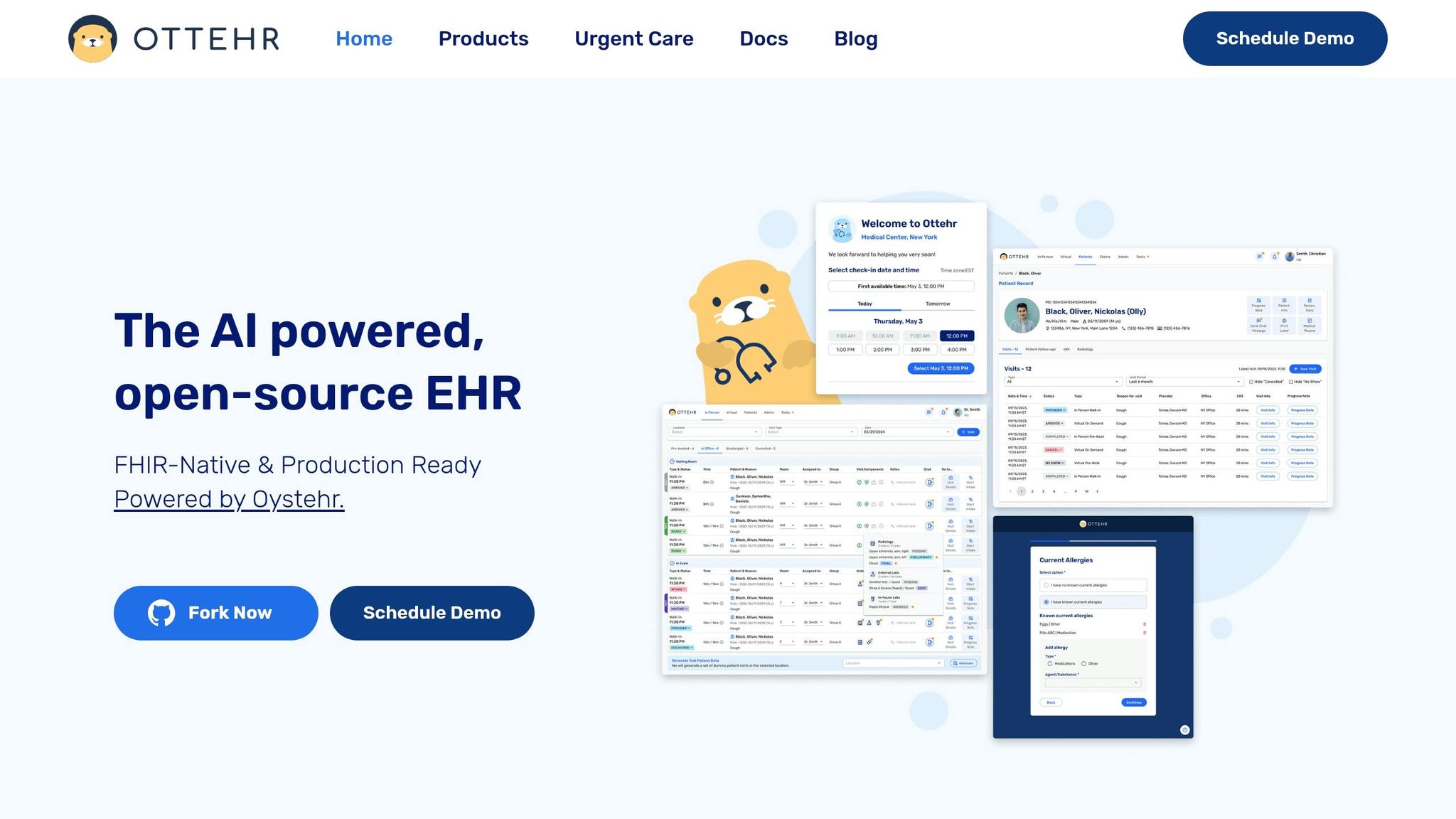
Implementing Ottehr builds on strategies to enhance patient engagement and revenue, offering a tailored solution for improving patient retention.
For urgent care practices, Ottehr provides a customizable AI platform specifically designed for high-volume, episodic care. Unlike traditional systems with rigid features, Ottehr's open-source, API-first architecture allows practices to adjust screens, workflows, and system behaviors to meet their unique operational needs. This flexibility helps reduce scheduling issues - a major factor in patient attrition.
Ottehr's reliability is backed by extensive deployments. Its modular front-end, built on a headless service architecture, ensures seamless integration, easy adaptation, and white-labeling for a personalized, branded patient experience.
Each deployment of Ottehr includes pre-allocated engineering hours for customization, which can be handled by either Ottehr's team or your own developers. This enables practices to fine-tune critical touchpoints like patient paperwork, intake forms, messaging tools, scheduling systems, and queuing processes. These adjustments are crucial since 61% of patients skip appointments due to scheduling difficulties. By addressing these pain points, practices can significantly improve patient adherence and retention.
"Ottehr was built in the age of AI and natively incorporates AI (patient interviewing, agents, ambient listening, etc.) and through its APIs can connect to current and future industry best-in-class AI tools." – Ottehr
The platform also includes tools tailored for urgent care, such as a Visits Tracking Board, Orders Management System, and Tasks Board. Designed by urgent care experts, these features provide real-time updates and help minimize patient delays. Together, these tools create a smooth, personalized experience that encourages patients to return. Additionally, Ottehr's tiered pricing plans cater to practices of all sizes.
Ottehr offers three pricing tiers to accommodate practices ranging from solo providers to large, multi-location centers. Each plan builds on the previous one, allowing practices to start with essential tools and expand as their needs grow.
| Plan | Price | Core Features | Best For |
|---|---|---|---|
| Ottehr AI | Free | In-person & telemedicine visits, electronic paperwork, patient portal, AI HPI chatbot, AI ambient scribe, tracking board | Solo providers or small practices testing AI-powered workflows |
| Ottehr Clinical | $349/provider/mo | Everything in AI, plus custom branding/domain, ePrescriptions, SMS/Fax, AI coding assistant, payment processing (2.9% + $0.30), radiology integration | Growing practices needing integrated clinical tools |
| Ottehr RCM | $599/provider/mo | Everything in Clinical, plus claims submission, denial management, fee schedules, patient billing/statements, full RCM reporting | Established practices focusing on complete revenue cycle management |
The free Ottehr AI plan provides immediate access to tools like the AI ambient scribe and HPI chatbot, which help reduce provider charting time and streamline patient intake. For practices looking to enhance their patient experience, the Ottehr Clinical plan adds features like custom branding, ePrescriptions, and an AI coding assistant for $349 per provider per month. For $599 per provider per month, the Ottehr RCM plan includes comprehensive revenue cycle management, addressing billing challenges and simplifying patient payment processes.
Ottehr reports that its platform can cut the time and cost of developing a custom EHR by 95%, making it an efficient choice for urgent care practices aiming to improve retention through tailored solutions without incurring high development costs.
AI-powered EHR systems are reshaping urgent care by automating routine tasks and simplifying operations. These systems handle documentation, scheduling, and insurance verification, allowing clinical staff to dedicate more time to providing personalized care that strengthens patient relationships.
Ottehr's platform is designed to address the unique challenges of urgent care. With tools proven effective across over 1 million urgent care visits, Ottehr's AI-native platform helps combat patient attrition by easing provider burnout. Its ability to identify returning patients and quickly access their medical history plays a direct role in improving retention rates.
For urgent care centers using AI-driven tools, the benefits are clear: higher patient volumes, reduced administrative burdens, and quicker, more accurate care that enhances patient satisfaction. As Ottehr explains, "Ottehr drives business through its sleek and easy patient scheduling, provider charting time is reduced dramatically through AI interviewing and through ambient listening AI scribing... Happy patients, happy clinicians, and happy executives!"
Ottehr's tiered pricing model, which includes a free introductory plan, removes financial barriers for providers. Whether you're a solo practitioner exploring AI workflows or a multi-location center in need of advanced revenue cycle management, the platform adapts to your needs while cutting development time and costs by up to 95%.
The urgent care industry is evolving quickly, and patients now expect seamless, digital-first experiences. Embracing an AI-powered EHR isn't just about staying relevant - it's about creating a foundation for growth, better clinical outcomes, and stronger patient loyalty.
AI-powered EHR systems help cut down on no-shows by using smart tools like automated reminders sent through SMS, email, or calls. These reminders are personalized and sent at the right time to ensure patients are less likely to forget their appointments.
On top of that, these systems can analyze patient attendance trends to identify appointments that are more likely to be missed. This allows clinics to reschedule proactively, saving time and resources.
Conversational AI also plays a role by addressing common challenges, such as forgetfulness, in a more interactive way. This not only boosts patient engagement and retention but also makes workflows smoother - especially for busy urgent care clinics.
AI tools in urgent care are built to assist front-desk and clinical staff, not take their place. These tools handle tasks such as patient check-ins, verifying insurance, and answering routine questions, which helps cut down on administrative workloads. This frees up staff to concentrate on providing personalized care and tackling more complex responsibilities. By streamlining operations and easing staff fatigue, AI complements their roles, enabling better care without replacing the human touch.
Implementing an AI-powered EHR system like Ottehr depends on several factors, including the size of the practice, the complexity of its operations, and any specific customization needs. For practices opting for pre-configured modules, deployment can be completed in just a few weeks. However, if extensive customization or advanced AI feature integration is required, the process may extend to several months. On average, most setups take between 2 to 6 months. Thanks to Ottehr’s modular design, the system is adaptable, making it easier to tailor the implementation to fit the unique needs of each practice.

Tell us what you need and we'll get back to you soon.