
AI scribes, chatbots and FHIR-native EHRs boost medication accuracy, cut errors, and save clinician time in urgent care.
AI is transforming how urgent care tracks medication histories, solving long-standing challenges like incomplete data, manual entry errors, and fragmented systems. By leveraging AI-powered tools, urgent care providers can now access accurate, consolidated medication records, reducing errors and improving patient safety.
Key advancements include:
These tools not only improve accuracy but also save time, cut costs, and enhance clinician satisfaction. AI is setting a new standard for safety and efficiency in urgent care.

AI-Powered Medication Tracking Results in Urgent Care: Key Statistics and Outcomes
Urgent care providers now have access to AI tools that tackle the often time-consuming task of documenting medication histories. These tools do more than just record data - they verify, organize, and streamline the process of managing medication information.
Vision-enabled AI scribes are changing the game in medication history documentation. Unlike audio-only systems, these tools use wearable devices like smart glasses to capture both verbal interactions and visual details - such as medication bottles, packaging, and dosage counters. A study published in February 2026 in npj Digital Medicine highlighted the effectiveness of this approach. Ten clinical pharmacists used Ray-Ban Meta smart glasses paired with Google's Gemini model to conduct 110 simulated medication history interviews. The results? A 98% accuracy rate across 2,160 data points, with omission errors dropping from 358 (audio-only systems) to just 10 when visual data was incorporated. Additionally, the system identified medication strength and form with 97% accuracy using video input, compared to only 28% with audio alone.
"Ambient scribes supporting clinical documentation are poised to become one of the fastest technology adoptions in the history of healthcare",
- Dr. Rahul C. Deo, Atman Health.
These systems extract critical prescription details - such as medication name, strength, dose form, route, frequency, and duration - and generate structured summaries that clinicians can quickly review. This eliminates the need for extensive manual entry, allowing healthcare providers to focus more on patient care. Conversational AI tools further enhance this process by simplifying patient data collection.
Pre-visit chatbots are another powerful tool in the AI arsenal. These conversational agents engage with patients via text or voice before their arrival at urgent care facilities, gathering medication histories and flagging discrepancies for clinicians to review. In June 2025, Atman Health introduced AMREC, a Medication Reconciliation Conversational AI agent built on the fine-tuned Llama-3.1-8B-Instruct model. This tool achieved an impressive 98.3% accuracy in identifying 18 key prescription elements. It also resolved issues like mismatches between prescribed and actual doses, missing usage instructions in approximately 25% of imported prescriptions, and discrepancies in insurance records. By doing so, AMREC cut manual reconciliation time by 15 to 30 minutes in complex cases.
When patients provide shorthand instructions like "one tab po qd", the AI translates this into structured fields (e.g., "oral, once daily"), further reducing the workload for clinicians. This level of efficiency not only saves time but also ensures greater accuracy in medication management.
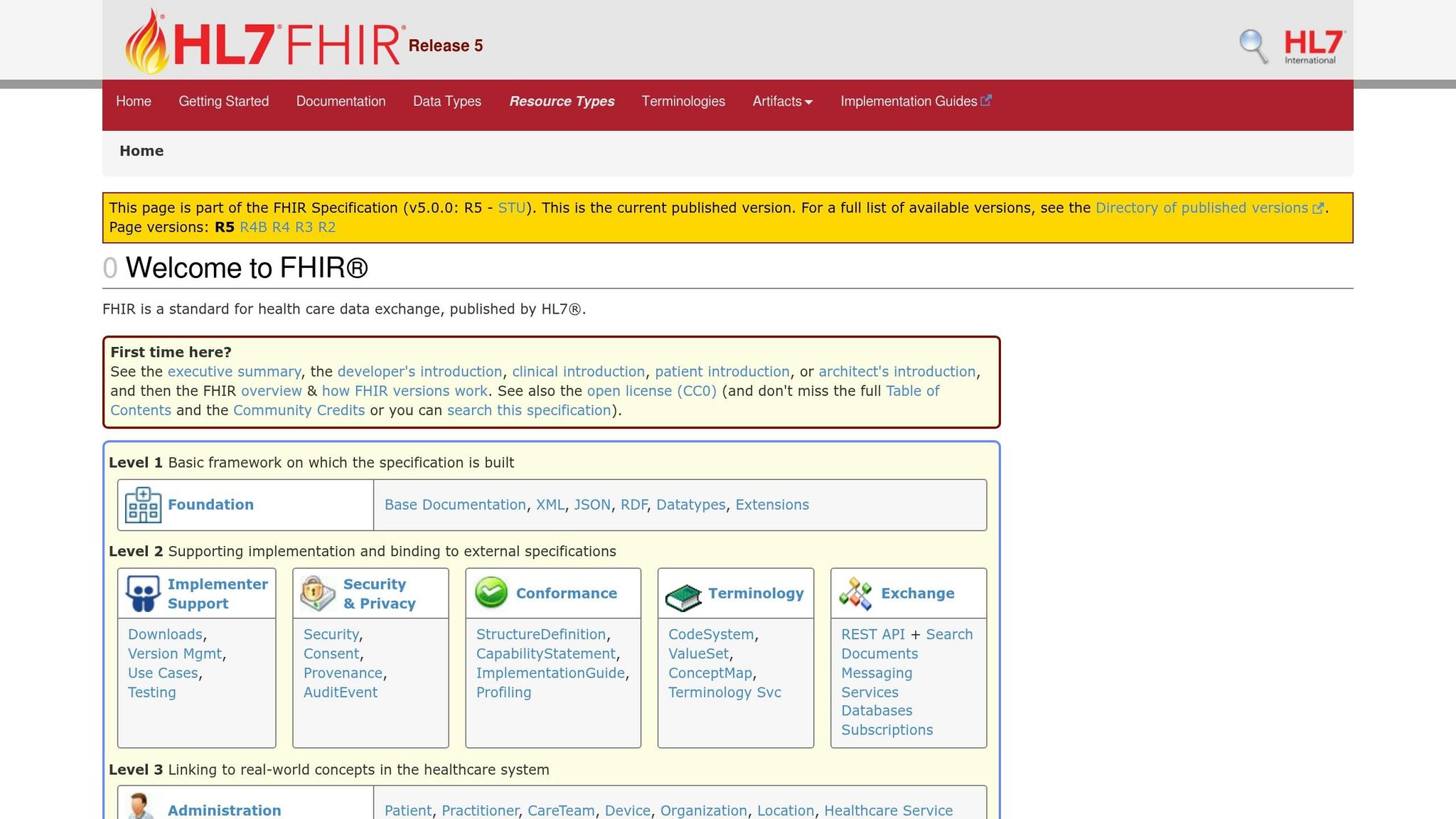
A strong FHIR-native infrastructure is the backbone of effective AI-driven documentation in urgent care. When it comes to medication tracking, the success of AI tools hinges on the quality of this foundation. FHIR-native EHR platforms provide the structured, standardized data AI systems need to deliver accurate results. Unlike older systems that rely on fragmented databases, FHIR (Fast Healthcare Interoperability Resources) standards enable real-time data analysis by organizing information in a consistent, accessible format.
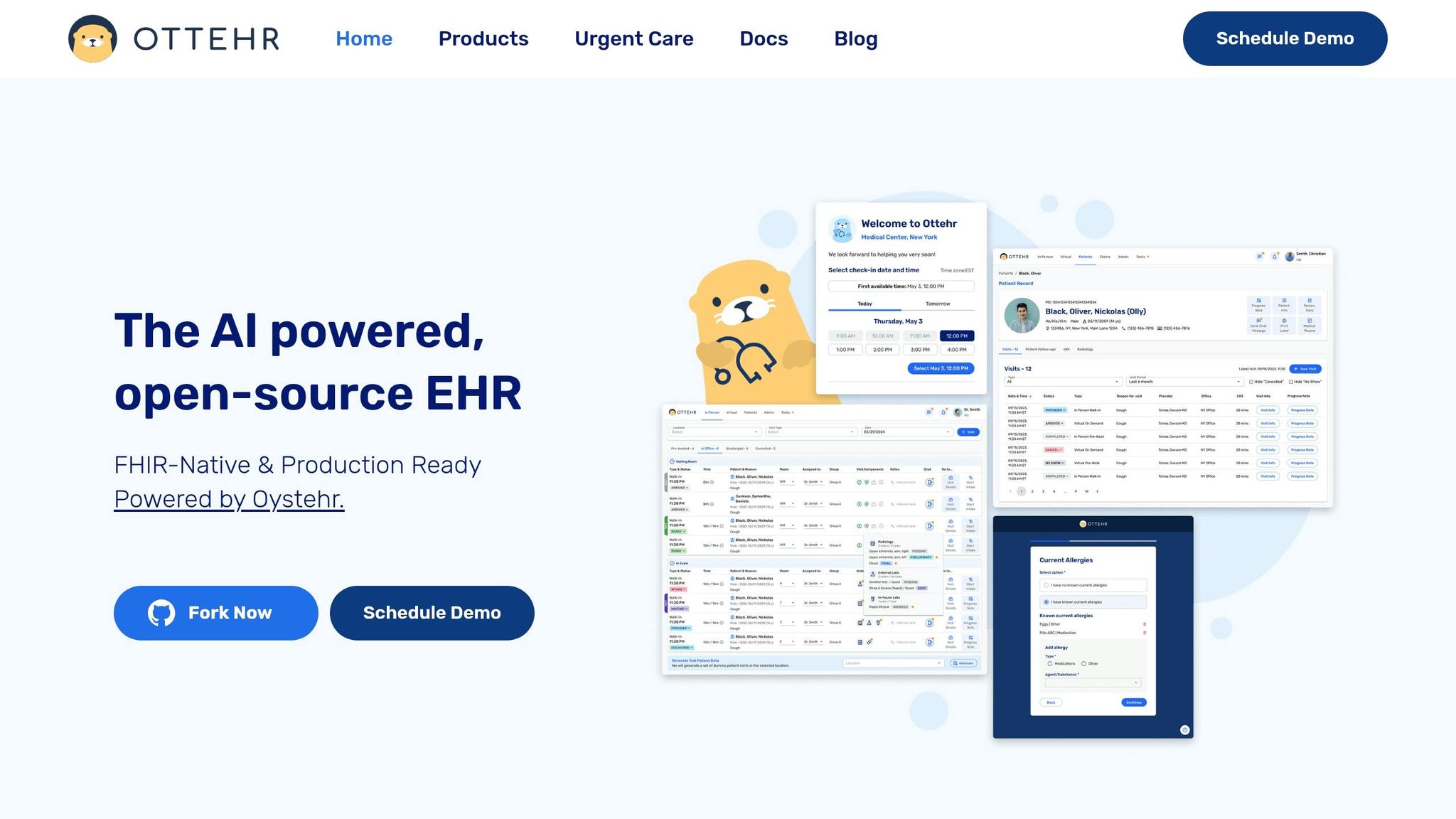
Ottehr represents a cutting-edge EHR platform designed with AI integration at its core. Its modular, headless architecture allows urgent care providers to embed AI tools seamlessly into their workflows, sidestepping the limitations of traditional monolithic systems. Patient medication histories feed into a unified FHIR service, giving AI tools - like HPI chatbots and ambient scribes - instant access to a centralized source of truth.
With over 1 million urgent care visits already processed, Ottehr is built to scale, handling millions of visits monthly. Its standout feature is its structured data mapping, where medications align with NDC codes and allergies with ICD-10 codes. This precision allows AI tools to perform accurate drug-drug interaction (DDI) and drug-allergy interaction (DAI) checks. In April 2026, Ottehr v1.32 introduced a unified tracking board and enhanced AI charting tools, streamlining medication documentation for both in-person and telemedicine visits.
"Ottehr was built in the age of AI and natively incorporates AI... and through its APIs can connect to current and future industry best-in-class AI tools." - Ottehr
As an open-source platform, Ottehr gives developers the flexibility to embed AI-powered tools like scribes and automated documentation directly into the charting interface. This adaptability means urgent care practices can tailor workflows for specific needs - whether it’s occupational medicine or pediatric care - without overhauling the entire system. Ottehr offers three subscription tiers: Ottehr AI (free, including AI HPI chatbot and ambient scribe), Ottehr Clinical ($349/provider/month, adding features like eRx and diagnostic orders), and Ottehr RCM ($599/provider/month, with full revenue cycle management). This modular approach ensures seamless integration and maintains data integrity across workflows.
FHIR-native systems, like Ottehr, address the challenges of data fragmentation, streamlining workflows in urgent care settings. Tools like ambient scribes and chatbots depend on clean, structured data. For instance, substances not found in a searchable database cannot be entered as unstructured text, ensuring the data remains organized and ready for AI processing.
The API-first approach further enhances integration, enabling connections to external AI tools while maintaining real-time synchronization. This means that when a medication is prescribed or an allergy is reported, the update is instantly reflected across all modules - whether it’s eRx, charting, or patient intake. Some FHIR-native eRx systems even help patients select alternative medications if their pharmacy is out of stock. By automating these processes, FHIR-native platforms transform medication tracking into an intelligent, hassle-free experience.
Recent research sheds light on how urgent care settings have achieved measurable improvements by implementing AI-driven solutions.
In spring 2020, Covenant HealthCare in Saginaw, Michigan, faced the challenge of handling 65–70 emergency arrivals daily during the COVID-19 pandemic. Under the leadership of Rebecca Sulfridge, Pharm.D., the facility incorporated DrFirst's clinical-grade AI into their Epic EHR system to replace in-person medication interviews. This change led to a remarkable drop in medication errors - from 5.4 to 0.55 per patient, an 89.2% decrease. Additionally, the accuracy of prescription instructions (sig) surged to 93%, a significant improvement from the previous rate, where 65% of medications lacked instructions entirely.
"If you would have told me six years ago we would have 93% accuracy from a database for home medications, I would have probably looked at you like you were a little bit nuts." - Rebecca Sulfridge, Pharm.D., Clinical Pharmacist Specialist, Covenant HealthCare
Similar advancements were seen at Cone Health in Greensboro, North Carolina, starting in late 2020. This health system, which includes five urgent care centers, connected 69 local pharmacies to its EHR under the guidance of Thomas Pickering, PharmD. The AI-powered system achieved 93% medication history retrieval for general patients and an impressive 98% for high-risk patients over 65. Meanwhile, at Seoul National University Bundang Hospital, a study conducted between 2021 and 2022 highlighted how AI-driven medication history retrieval reduced the time from emergency department assessment to the start of urgent percutaneous coronary intervention by 13.4 minutes - bringing the average time down from 42.14 to 28.72 minutes. These accuracy gains not only improve patient safety but also streamline workflows.
The implementation of AI technology has also delivered substantial time savings and workflow enhancements. Covenant HealthCare reported a 33% boost in staff productivity, with medication reconciliations rising from 21 to 28 per shift. This efficiency translated into 1,430 saved labor hours and an estimated $6.7 million in annual savings by preventing adverse drug events.
At Cone Health, the AI system eliminated 20 million manual clicks and keystrokes for clinical staff. Over a 90-day period, it captured 2.8 million additional prescription fills and improved staff satisfaction by nearly 40%.
"It's more data, it's better data, and it's a lot faster to import." - Thomas Pickering, PharmD, Administrative Coordinator, Cone Health
Carle Health in Urbana, Illinois, also saw impressive results by the end of 2021. Their AI integration ensured that 99% of high-risk patients had their external medication history reviewed - far surpassing the peer average of 77%. Jason Tipton, inpatient pharmacy operations supervisor, highlighted how the system minimizes manual data entry, allowing staff to dedicate more time to direct patient care.
AI is reshaping urgent care by moving beyond documentation to real-time medication monitoring. This shift aims to catch errors early and identify risks before they escalate.
Wearable technology is changing how clinicians handle and verify medication information. A 2026 study in npj Digital Medicine highlighted the role of vision-enabled AI in improving documentation accuracy. The study demonstrated how visual inputs from wearable devices significantly reduce errors in tasks requiring observation.
"Vision-enabled AI scribes substantially improved documentation accuracy for tasks requiring visual input, demonstrating potential to markedly reduce omission errors in clinical documentation." - npj Digital Medicine
In October 2024, researchers at the University of Washington, led by Dr. Kelly Michaelsen and Professor Shyam Gollakota, introduced a wearable camera system using GoPro Hero8 cameras. This system could identify vials and syringes in real time with 99.6% sensitivity and 98.8% specificity, acting as a safeguard against vial-swap errors.
"The thought of being able to help patients in real time or to prevent a medication error before it happens is very powerful." - Dr. Kelly Michaelsen
Outside clinical settings, devices like smart pill bottles and wearable sensors are enabling proactive monitoring of medication adherence. These sensors track metrics such as gait, sleep, and heart rate, while machine learning models predict nonadherence risks over 7 to 30 days with AUC values ranging from 0.75 to 0.85. This shift from tracking medication refills to real-time physiological monitoring allows urgent care providers to intervene early, preventing adverse outcomes. While wearables focus on real-time tracking, predictive analytics are driving advancements in clinical decision-making.
AI-powered predictive analytics are taking data capture to the next level by actively guiding treatment decisions. In October 2025, researchers developed PharmacyGPT, a framework leveraging GPT-4 to analyze medication regimens for 1,000 ICU patients. PharmacyGPT achieved a hospital mortality prediction accuracy of 0.75 and grouped patients into disease-specific clusters, such as "neurological impact", to support personalized treatment approaches. This is crucial, as unintended adverse drug events affect 5% of hospitalized patients annually, doubling their mortality risk.
In another example, the mPROVEN clinical trial, conducted in March 2025, integrated a validated machine learning overdose risk model into EHR systems. Researchers, including F. Walid Gellad, used "nudges" and "accountable justification alerts" to improve opioid prescribing practices. By May 2025, the trial had enrolled 798 patients to test if AI-generated alerts could enhance prescribing safety.
Additionally, transformer-based natural language processing models are now capable of detecting drug-drug interactions and conflicts from unstructured or even handwritten prescription data. Platforms like Ottehr's FHIR-native EHR eRx module can automatically generate interaction and allergy alerts during urgent care visits, reducing risks before prescriptions are finalized. With drug administration errors impacting an estimated 1.2 million patients annually and costing $5.1 billion, these predictive tools offer a way to improve patient safety and streamline operations.
AI-driven tools for tracking medication history have become a game changer in urgent care settings. Research shows that these systems significantly boost accuracy in documentation while actively reducing the risk of patient harm. For instance, a study conducted at McLean Hospital revealed that 88% of medication errors flagged by pharmacists using AI-powered tools could have caused harm if not addressed.
The benefits go beyond accuracy - AI tools also streamline operations in measurable ways. Cone Health, for example, recorded 2.8 million additional prescription fills within just 90 days of implementing such systems, achieving a 98% medication history capture rate for high-risk patients aged 65 and older. Similarly, Baptist Health saved clinicians 7 million clicks while uncovering 23,000 medications that might have been overlooked. These advancements also led to a nearly 40% increase in staff satisfaction.
"We're getting very close to what I call 'the holy grail' of medication history where every prescription fill record is at our fingertips." - Thomas Pickering, PharmD, Cone Health
With platforms like Ottehr, which integrate seamlessly into workflows using FHIR standards, urgent care providers are now better equipped to deliver safer and more efficient care. As AI continues to advance - incorporating wearable health monitoring and predictive analytics - its role in minimizing errors and optimizing patient outcomes will only grow.
AI scribes are stepping up their game by using video in multimodal systems to piece together more precise medication histories. Here's how it works: vision-enabled AI scribes use tools like smart glasses to capture both audio and video. These devices don't just listen - they also analyze what they see, including medication containers, labels, and other visual details, alongside spoken information. This dual approach sharpens the accuracy of documenting medication names, dosages, and instructions, significantly cutting down on errors and missed details compared to relying on audio alone.
Pre-visit chatbots leverage conversational AI to engage with patients and gather medication details through a natural dialogue. By confirming and clarifying this information, these chatbots help spot and fix any inconsistencies, leading to more precise medication records.
A FHIR-native EHR plays a key role in improving medication safety checks. By providing standardized and real-time access to medication data across various systems, it helps reduce errors and ensures more accurate medication reconciliation. This not only boosts patient safety but also simplifies workflows for healthcare providers.

Tell us what you need and we'll get back to you soon.