
Clinical and RCM benchmarks for urgent care: wait times, claim denials, NCR, DSO, POS collections and improvement tips.
Urgent care centers thrive on efficiency and financial stability. To achieve this, tracking key benchmarks is essential. Clinical metrics like patient wait times, no-show rates, and provider utilization ensure smooth operations and better patient experiences. On the financial side, revenue cycle management (RCM) metrics like claim denial rates, Net Collection Rate (NCR), and Days Sales Outstanding (DSO) reveal how well your practice is managing cash flow and reimbursements.
Here’s what you need to know:
The following clinical benchmarks play a crucial role in shaping the performance of urgent care centers. They offer insights into daily operations, helping clinics optimize patient flow, ensure appointment reliability, and make the best use of clinical resources. Below are three essential metrics that directly influence patient care and the financial health of urgent care facilities.
Short wait times are a cornerstone of patient satisfaction and operational success. Today’s patients expect quick, convenient care and often choose clinics based on how promptly they can be seen. When wait times drag, it can lead to negative online reviews, patients opting for competing providers, or even walkouts before treatment. Tools like real-time dashboards can pinpoint delays as they happen, enabling staff to adapt workflows or adjust staffing levels on the fly. For instance, if slow charting processes are causing bottlenecks, streamlining documentation can not only improve patient flow but also accelerate the billing process.
Keeping no-show rates below 10% is critical for maintaining both revenue and operational capacity. Each missed appointment represents lost income and an underutilized time slot. By tracking no-show rates, clinics can fine-tune their scheduling systems and implement effective reminders to reduce these occurrences.
Provider utilization is a balancing act between productivity and quality care. For an urgent care clinic to remain financially viable, providers typically need to see about 25 patients per day. However, overburdened providers may face challenges like delayed documentation, which can disrupt coding and billing processes. Additionally, when clinicians are stretched too thin, they may shy away from more complex procedures, such as laceration repairs or foreign body removals, limiting the range of services offered. Dr. Patrick O'Malley highlights this concern:
"Lack of procedural confidence may be contributing to the decreasing complexity and scope of urgent care medicine".
With nurse practitioners and physician assistants now making up 85% of urgent care clinicians, monitoring utilization rates is key to ensuring both efficiency and procedural competency. Together, these clinical benchmarks offer actionable insights to enhance operational efficiency and deliver patient-centered care. They also lay the groundwork for understanding financial benchmarks, which will be explored in the next section.
While clinical benchmarks focus on daily operations, revenue cycle management (RCM) metrics reveal the financial health of your practice. Thomas John, CEO of Plutus Health, puts it plainly: "Broken revenue is never just a billing problem. It is a care problem". These metrics track how effectively revenue is captured from the moment a patient checks in until final payment is collected. They work alongside clinical benchmarks to ensure that efficient patient care also translates into strong financial outcomes. Below are four critical metrics to keep your urgent care practice's revenue cycle on track.
The claim denial rate measures the percentage of claims insurance payers reject. The benchmark is to keep this rate below 5%, though rates under 10% are generally acceptable. Alarmingly, around 65% of denials go unappealed, even though 60–90% are recoverable. Each reworked denial costs between $25 and $118, making prevention significantly more cost-effective than fixing errors after the fact.
To tackle denials effectively, track them by payer and procedure code (CPT). This approach helps identify patterns, such as specific insurers rejecting certain codes, so you can address root causes instead of resubmitting claims repeatedly. Training staff on accurate medical coding and maintaining open communication with payers about recurring documentation issues can reduce denials. As payers increasingly use AI-driven tools like UnitedHealth's nH Predict and Cigna's PXDx platform, denial rates across the industry are expected to hover around 10–12% in 2025. Staying ahead means implementing claim scrubbers that check for NCCI (National Correct Coding Initiative) and LCD (Local Coverage Determination) edits before submission.
The Net Collection Rate (NCR) is often considered the most accurate indicator of revenue cycle effectiveness, showing how much revenue you actually collect versus what you're legally entitled to receive. High-performing practices maintain NCR rates between 98% and 99%, while rates below 92% indicate revenue leakage. Unlike gross collection rates, NCR accounts for contractual adjustments.
To maintain a strong NCR, distinguish between unavoidable contractual adjustments and preventable write-offs caused by errors or bad debt. Misclassifying these can artificially inflate your NCR. Achieving a clean claim ratio of 98% or higher and a First Pass Payment Ratio of 95% - where claims are paid without intervention - are key to success. Rigorous insurance verification during registration can prevent denials tied to terminated coverage, while analyzing recurring denial patterns helps address root causes like missing modifiers or incomplete documentation.
Days Sales Outstanding, or Days in AR (Accounts Receivable), measures how long it takes to collect payment after services are rendered. A healthy DSO is under 30 days, with top-performing organizations often achieving closer to 25 days. If your DSO exceeds 55 days, it’s a clear warning sign of billing inefficiencies that could disrupt cash flow.
To reduce DSO, aim to enter charges within 48 hours of the patient encounter to kickstart the reimbursement process quickly. Regularly review claims older than 60 days to ensure they don’t miss payer filing deadlines. Automation tools for claims processing and diligent insurance follow-up can prevent payments from languishing in accounts receivable. Additionally, monitor the proportion of AR older than 60 days; anything over 20% indicates deeper issues.
As high-deductible health plans become more common, collecting patient-owed balances is essential to avoid bad debt. For point-of-service (POS) collections, the benchmark is 45–55%, while overall patient responsibility collections should exceed 95% within 120 days. Delayed collection efforts significantly reduce the likelihood of payment.
Collect co-pays and balances during the visit whenever possible. Digital payment tools, upfront pricing estimates, and well-trained front-desk staff can make these interactions smoother and more routine. Card-on-file systems are especially helpful, allowing automatic charges for residual balances once insurance processes the claim. Verifying insurance eligibility at least 48 hours before the visit ensures accurate collection amounts and avoids surprises at check-in.

RCM Benchmarks Comparison: Industry Standards vs Ottehr Performance Targets
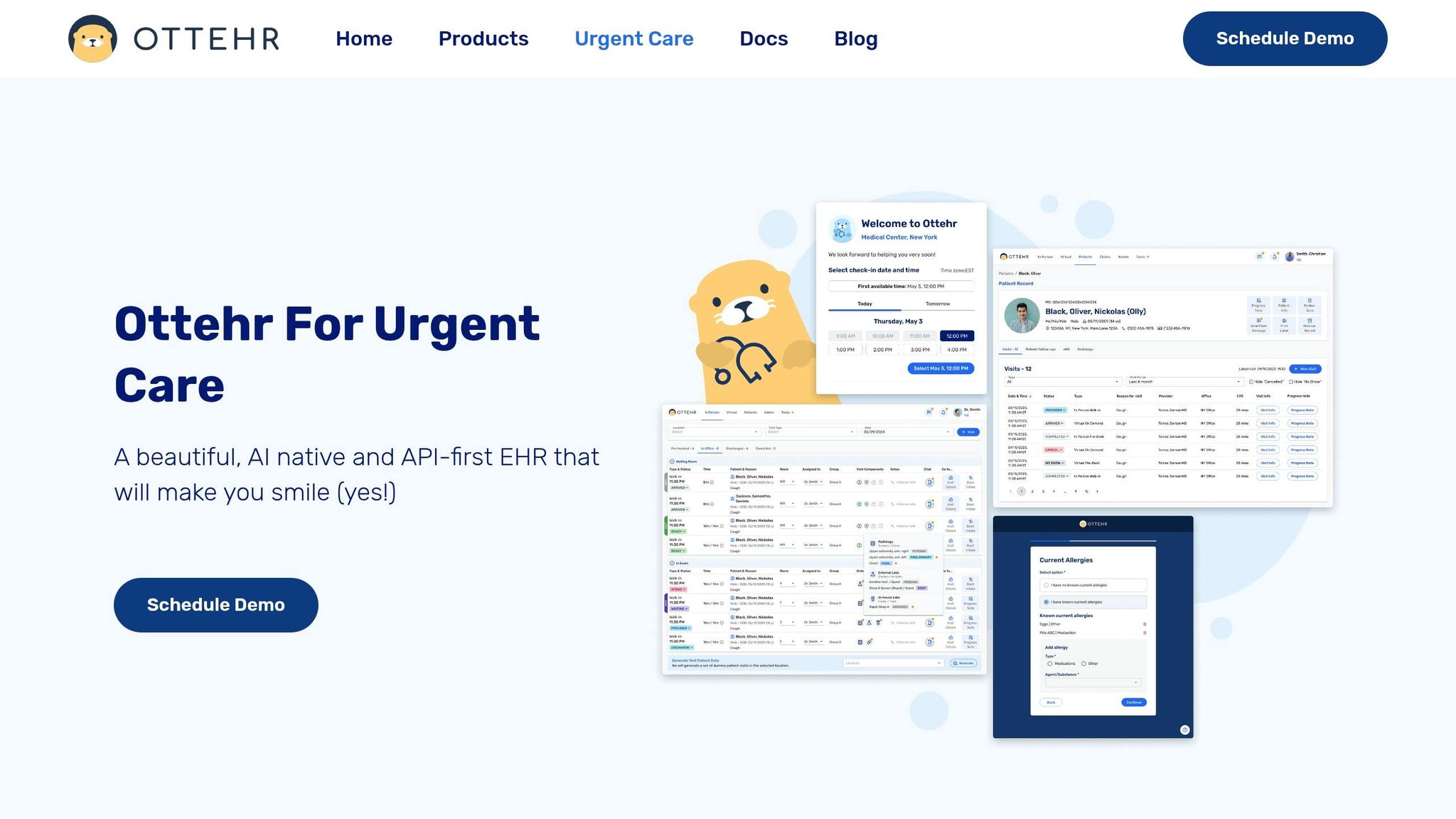
The table below highlights how Ottehr's targets stack up against typical industry benchmarks for revenue cycle management (RCM). By shifting from reactive billing to a proactive approach, these comparisons showcase the financial potential of adopting Ottehr's strategies.
RCM efficiency focuses on recovering revenue often lost to delays or denials. Ottehr's targets are grounded in proven methods like AI-driven coding and real-time validation, addressing common pain points in RCM. Here's the side-by-side comparison:
| RCM Metric | Threshold for Improvement | Ottehr Target |
|---|---|---|
| Initial Denial Rate | > 10% | < 5–6% |
| Net Collection Rate | < 92% | ≥ 96% |
| Clean Claim Rate | < 90% | ≥ 95% |
| Gross Days in AR | > 55 days | < 40 days |
| Point-of-Service (POS) Collection Rate | < 30% | 45–55% |
| Avoidable Write-offs | > 3% of net revenue | < 1.5% of net revenue |
Two key areas for improvement stand out: reducing the Initial Denial Rate and increasing the POS Collection Rate. Ottehr's AI coding assistant and real-time insurance validation directly tackle these challenges. For instance, lowering the denial rate from 10% to under 6% can recover substantial revenue every month. Similarly, raising POS collections from 30% to 50% reduces the risk of bad debt significantly.
Ottehr's RCM plan, priced at $599 per provider per month, includes tools like automated claims submission, denial management, and a rules engine designed to help practices hit these ambitious targets.
Meeting these benchmarks not only boosts revenue but also enhances the overall patient experience in urgent care settings. The next section will dive into actionable strategies for implementing and sustaining these improvements.
Ottehr provides solutions designed to tackle operational and financial challenges in urgent care settings. By focusing on clinical and revenue cycle management (RCM) benchmarks, Ottehr ensures practices can achieve measurable improvements through its integrated tools.
Ottehr's Visits Tracking Board offers real-time insights into patient visits, helping streamline care coordination and cut down on delays. With a proven track record across more than 1,000,000 visits, the platform is built to handle high patient volumes efficiently. Using FHIR standards, Ottehr allows practices to create custom dashboards and workflows via its API-first architecture. This means you can closely monitor critical benchmarks like door-to-provider times and left-without-being-seen rates.
Ottehr Clinical includes an AI Coding Assistant that helps reduce coding errors and claim denials, while real-time insurance validation addresses front-end mistakes before they become costly. The Ottehr RCM plan takes this further with features like automated claims submission, a built-in rules engine, and tools for managing denials. These solutions, priced at $349 and $599 per provider per month respectively, ensure accurate coding and smoother claims processing, simplifying every stage of the revenue cycle.
With Ottehr, practices have full control over their EHR data, enabling them to create custom reports for tracking performance metrics. Whether you need to monitor daily visits per clinic or compare your net collection rates to industry standards, Ottehr's reporting tools can be tailored to meet specific needs. The RCM module also provides specialized reporting for claims, denial management, and receivables, giving practices the data they need to make informed, strategic decisions.
Let’s dive into how you can put benchmarks into action and keep them running smoothly in your urgent care practice.
Start by identifying essential financial metrics like Days in AR, Clean Claim Rate, and Net Collection Rate to assess your practice's current performance. Conduct a 12-month AR aging analysis to uncover recurring issues in areas like documentation, follow-up, or coding. Use the benchmarks of top-performing practices as your improvement targets.
Each metric should be tied to a specific operational challenge. For instance, if your practice sees a high number of level-two E/M visits, the root cause might be incomplete clinical documentation rather than low-acuity cases. Assign responsibility for each metric to the appropriate team member - front desk staff for eligibility verification, coders for clean claim rates - to ensure accountability. Integrate data from your practice management system, EMR, and clearinghouse into a unified system to maintain consistency.
Once your baseline is established, focus on regular reviews and staff training to adapt these metrics as your practice evolves.
With baseline data in hand, use monthly denial trends to guide quarterly reviews. These reviews should dig into root causes and help you implement timely adjustments and training. Pinpoint whether issues stem from gaps in staff knowledge, payer contracts, or authorization workflows. As Safwan Azeem, an AMBCI expert, explains:
"Traditional productivity measures - claims per day, encounters coded per hour - miss the point if those claims are inaccurate or uncollectible".
Instead of fixating on static numbers, focus on trends. For example, increasing recovery rates from 40% to 55% shows meaningful progress. Train your team on the specifics of your top 5–10 payers to ensure benchmarks align with your largest revenue sources. Use quality assurance findings to design micro-lessons and monthly workshops, such as sessions on reducing Days Not Final Billed for certain case types.
Automation can be a game-changer for maintaining benchmarks and improving efficiency. Tools powered by AI can help address critical revenue cycle management (RCM) bottlenecks, including claim scrubbing, predictive denial alerts, and real-time eligibility verification. For example, automated eligibility verification can reduce denials by 22% in prior authorization scenarios, while AI tools can cut overall RCM denials by 30–40% by predicting issues before they arise. Practices that embrace AI often see a 15–25% boost in cash flow and 18–25% faster reimbursements.
To maximize ROI, analyze six months of denial data to spot trends - such as recurring coding errors for specific procedures - and adjust accordingly. Set up automated alerts for changes in reimbursement rates to stay compliant with payer contracts and capture potential revenue losses. Track automation usage as a performance metric, aiming to route at least 25% of repetitive tasks to bots or robotic process automation (RPA). This allows your team to focus on more complex tasks, like resolving denials, instead of spending time on repetitive data entry.
Tracking the right benchmarks can reshape how urgent care practices function. Clinical metrics such as patient wait times, provider utilization rates, and no-show rates have a direct impact on patient satisfaction and operational efficiency. On the financial side, metrics like claim denial rates, Net Collection Rate, Days Sales Outstanding (DSO), and patient payment collection rates play a key role in maintaining a steady cash flow.
These benchmarks highlight the factors driving your practice's performance. As Experity explains:
"Data is only valuable if you view it on a consistent basis, correctly interpret the meaning behind the numbers, and take the necessary action".
For example, monitoring your E/M code distribution can reveal whether documentation issues are leading to underbilling or if frequent level-four and level-five visits indicate potential upcoding risks. Metrics like "Days to Bill" and first-pass resolution rates can pinpoint procedural gaps - such as providers not locking charts or staff missing vital insurance details - that hinder revenue and disrupt operations.
Strong revenue cycle management (RCM) ensures providers stay focused on patient care. Accurate billing builds patient trust, minimizes disputes, and improves the overall patient experience. These benchmarks lay the groundwork for practical, technology-driven advancements, as detailed below.
Ottehr's platform leverages these benchmarks to optimize both clinical and RCM processes through automation and real-time insights. Tools like the AI ambient scribe and AI coding assistant help reduce documentation time while ensuring accurate coding on the first attempt - critical for improving first-pass resolution rates. On the financial side, Ottehr offers automated claims submission, denial management tools, and real-time eligibility verification to lower denial rates and speed up reimbursements.
The Visits Tracking Board provides real-time updates on patient flow, enabling practices to keep tabs on wait times and throughput. With Ottehr AI available for free and Ottehr RCM starting at $599 per provider per month, practices can select a solution tailored to their operational demands. By integrating clinical and financial workflows, Ottehr shifts practices from reactive problem-solving to proactive improvement, delivering measurable benefits in both patient care and operational efficiency. This ensures that every benchmark contributes to better performance across the board in urgent care.
Urgent care practices need to keep a close eye on benchmarks tied to revenue cycle management (RCM) and overall operational performance. Metrics like the time it takes from a patient visit to receiving payment and the accuracy of medical coding are crucial. These directly influence cash flow and the financial health of the practice.
Another important area to monitor is patient wait times. Shorter wait times not only boost patient satisfaction but also improve efficiency in day-to-day operations. By prioritizing these benchmarks, urgent care centers can build a strong foundation for maintaining both financial stability and excellent patient care.
To figure out the net collection rate, use this formula:
Net Collection Rate = (Total Collections / Total Billed Charges) × 100%
This calculation helps assess how efficiently revenue is being collected. It measures the percentage of billed charges that are successfully collected, taking into account adjustments, write-offs, and denials. Just make sure that the collections and charges you're comparing come from the same time period.
Improving front-end eligibility and benefits verification is the quickest way to cut down on claim denials. A large number of denials happen because of mistakes during this step. To tackle this, focus on creating reliable prevention workflows and edits that target frequent, high-impact denial patterns. These measures can greatly minimize errors and make your revenue cycle more efficient.

Tell us what you need and we'll get back to you soon.