
Compare urgent care EHR alternatives on charting speed, AI scribing, billing, reporting, integrations, and multi-site scale.
If Experity feels fast but limiting, I’d narrow the shortlist like this: Epic for hospital-owned urgent care, athenahealth for billing-first groups, eClinicalWorks or NextGen for more AI and data exchange, and Practice Velocity mainly for teams tied to its older urgent-care workflow. This article compares them on the things that matter most in urgent care: charting speed, intake, billing, reporting, integrations, and multi-site growth.
Here’s the short version:
If I had to boil it down even more, the trade-off is simple: some systems help you move walk-ins through the clinic with less friction, while others do a better job with AI, claims, and cross-system data sharing.
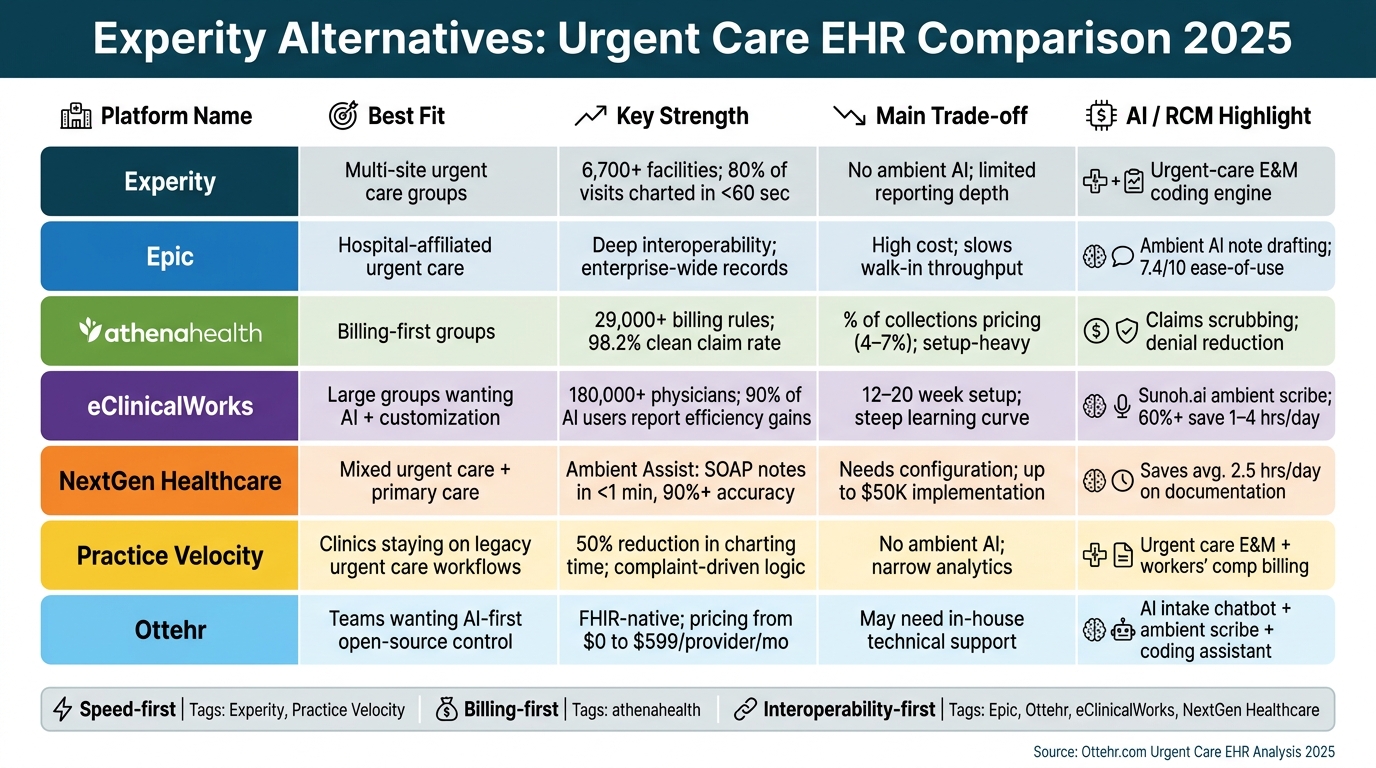
Experity Alternatives: Urgent Care EHR Comparison 2025
| Platform | Best fit | Main strength | Main trade-off |
|---|---|---|---|
| Experity | Urgent care groups focused on visit flow | Complaint-based charting and urgent-care-first workflow | Less depth in AI, reporting, and outside integrations |
| Epic | Hospital-affiliated urgent care | Shared records across the health system | Slower fit for walk-in care and high cost |
| athenahealth | Groups focused on claims and collections | Billing rules and claim scrubbing | More setup for urgent care flow; % of collections pricing |
| eClinicalWorks | Large groups wanting AI and customization | Ambient AI and broad feature set | Setup time and user learning curve |
| NextGen Healthcare | Groups wanting AI plus stronger interoperability | Ambient Assist, coding help, and HIE connections | More build work for urgent care use |
| Practice Velocity | Clinics staying close to older urgent care workflows | Fast complaint-driven charting | Legacy feel, narrower analytics, no ambient AI |
| Ottehr | Teams wanting AI-first workflow control | AI intake, ambient scribe, and open-source setup | May need in-house technical help |
If you’re choosing a replacement, I’d judge each one on one live urgent care visit, one billing workflow, and one total cost number before moving forward.
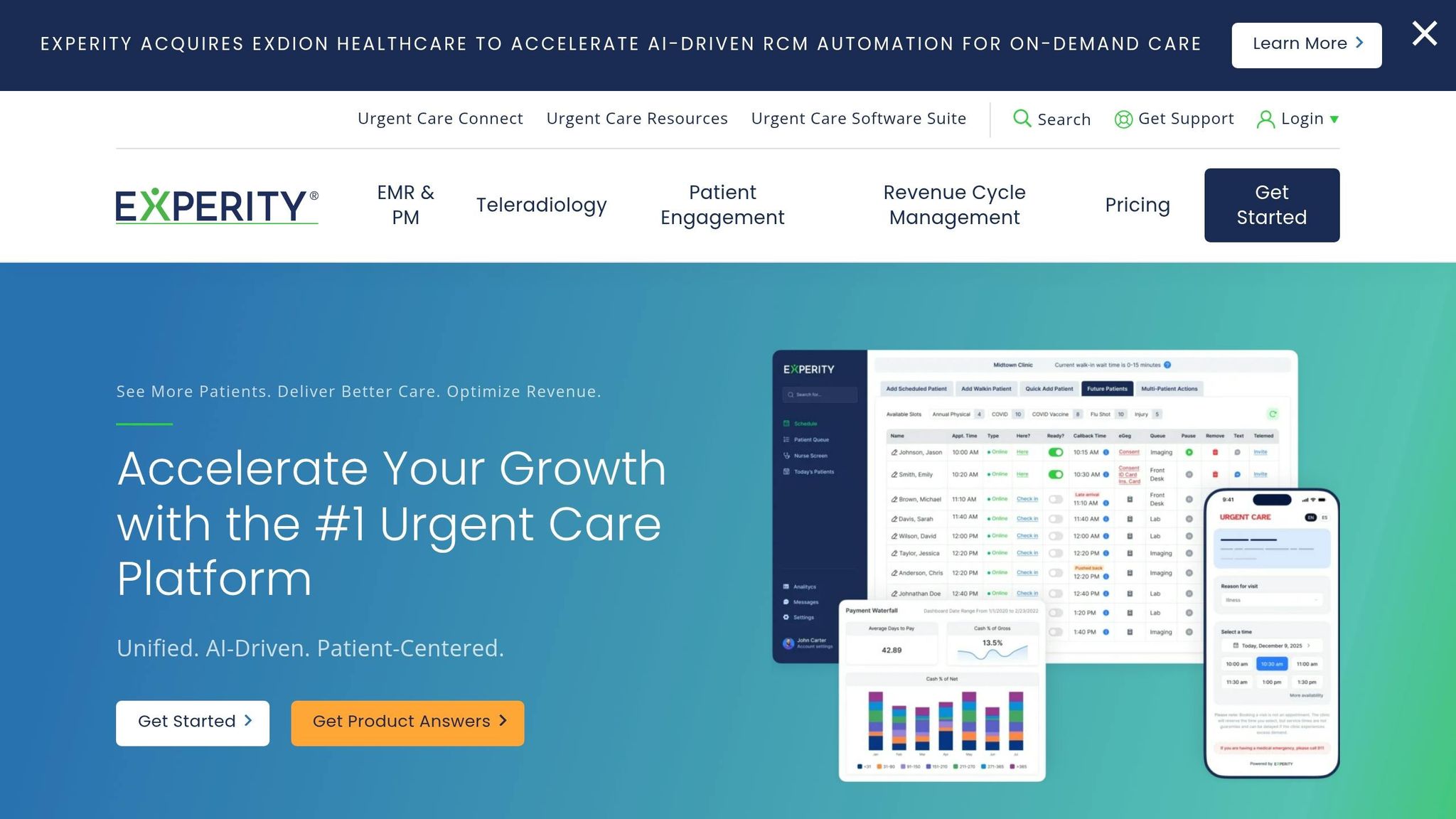
Experity supports more than 6,700 urgent care facilities and serves about 50% of the U.S. urgent care market. Its main strength is plain to see: speed at the point of care. With complaint-based charting and prebuilt templates, providers can document about 80% of common urgent care visits in under 60 seconds.
Experity is built around walk-in volume and fast patient movement. A color-coded occupancy board helps teams track where each patient is in the visit, and simultaneous charting allows nurses and physicians to work in the same chart at the same time.
It also goes deeper into occupational medicine than many general EHRs. Teams handling workers' compensation, DOT physicals, and employer-contracted services get workflows made for those use cases. That matters if occupational health is a big part of the business.
Experity does not offer native ambient AI scribing. Instead, documentation speed comes from its prebuilt templates, along with voice and handwriting recognition tools.
On the billing side, Experity is tuned for urgent care E&M coding, and its occupational health modules extend the RCM setup for clinics that serve employers. That said, users report that reporting depth can feel limited when they want to track clinical and financial performance in more detail.
Integration is another weak spot. Third-party connectivity is limited, especially for organizations that need patient tracking across care settings.
Those trade-offs tend to matter most for teams deciding between fast charting and deeper support for AI, reporting, and integration.
The comparison becomes clearer in a side-by-side view.
| Area | Capability | Known Gap |
|---|---|---|
| Charting | Prebuilt templates; 80% of visits in under 60 seconds | No ambient AI scribing |
| Billing/RCM | Built for urgent care E&M coding; occupational health modules | Limited reporting depth |
| Interoperability | Integrated EHR/PM | Limited third-party integration |
| Scale | Supports 6,700+ facilities | Limited flexibility outside the urgent care model |
For health-system-owned urgent care, Epic trades speed for integration. Epic (EpicCare Ambulatory) is an enterprise EHR built for large health systems and hospital-affiliated urgent care networks. It offers deep functionality, but that depth can slow down walk-in care.
Epic is built around longitudinal, scheduled care. In plain English, it was made for planned visits over time, not a steady stream of walk-ins. So out of the box, it's a weak match for urgent care unless the system puts in heavy configuration for episodic care.
It's built for scheduled panels, not walk-in queues. That said, hospital-owned urgent care networks already using Epic across the health system can still make it work. The big draw is shared patient charts across departments, especially when access to the same record matters more than front-desk speed.
Epic offers ambient AI that records visits and drafts visit notes and summaries in real time. It also gives AI coding suggestions during the visit. That can cut down on post-visit charting, which matters when clinicians are trying to keep the line moving.
Still, Epic's ease-of-use score is 7.4/10. That's a sign of a steep learning curve for fast-paced urgent care shifts. The AI helps, but it doesn't erase the need to tune the workflow for this setting.
Epic's revenue cycle tools handle complex billing well. But urgent care is its own animal. The system is not pre-optimized for urgent care E&M coding and usually needs configuration.
This is where Epic shines. Care Everywhere supports cross-institutional data sharing, which can cut the time staff spend tracking down patient history. For multi-site health networks, Epic supports standardized workflows across the organization using a single enterprise clinical data model.
That same enterprise focus is also the catch. Custom pricing makes Epic a poor fit for independent urgent care operators.
So the core tradeoff is pretty simple: Epic fits network alignment better than standalone urgent care speed.
| Area | Capability | Gap |
|---|---|---|
| Charting | Configurable templates; ambient AI note drafting | Needs major build work for urgent care speed |
| AI Tools | Ambient documentation; AI coding suggestions | Ease-of-use score of 7.4/10 points to usability friction |
| Billing/RCM | Handles complex, multi-specialty billing | Not pre-optimized for urgent care E&M coding |
| Interoperability | Care Everywhere; enterprise-wide data sharing | Better suited to health-system networks than standalone clinics |
| Scale | Supports large multi-site health networks | Custom pricing limits access for independent operators |
If your urgent care group cares more about billing performance than out-of-the-box visit speed, athenahealth (athenaOne) deserves a close look. It’s a cloud-based platform that brings together EHR, revenue cycle management, and patient engagement for high-volume ambulatory settings.
Compared with Experity, athenahealth shifts the edge away from fast template-driven charting and toward tighter billing control. Put simply, this is a billing-first option, not a speed-first one.
athenahealth supports walk-in registration and digital intake through its patient portal and messaging tools, but getting those workflows dialed in takes more setup than with a system built just for urgent care.
Charting leans on macros, templates, and encounter plans instead of complaint-driven logic. That means the system can work well, but it usually needs more tuning at the start. Urgent care clinicians using athenahealth spend an average of 6.4 minutes documenting encounters, and top operators report visits under 30 minutes. That’s solid performance, though it depends a lot on how well the platform is configured upfront.
athenahealth includes an automated E&M coder and documentation accelerators that give real-time coding support and cut down on manual charting work. The goal is to support compliance and reduce defensive downcoding.
Users often like how closely clinical documentation connects to billing. That tight handoff can save headaches later. At the same time, urgent care teams often mention the learning curve and the extra setup needed to make the platform fit their day-to-day flow.
This is where athenahealth tends to stand out. Its RCM engine uses more than 29,000 billing rules to catch errors before claims go out, and it posts a 98.2% clean claim submission rate for urgent care groups.
Pricing usually falls in the 4%–7% of collections range, with a minimum around $140 per provider per month. That model can get pricey as volume grows, but for groups that care most about revenue cycle control, the tradeoff may be worth it.
athenahealth connects more than 170,000 providers and processes about 315 million claims each year. Built-in connections to labs, imaging centers, and health information exchanges reduce manual result chasing.
For multi-site groups, centralized reporting and standardized workflows help keep locations aligned. That said, teams without clear internal processes may find the system a bit heavy at first.
| Area | Capability | Gap |
|---|---|---|
| Charting | Documentation accelerators; 6.4 minutes per encounter | No native complaint-driven logic out of the box |
| AI/Coding | Automated E&M coder; real-time coding support | Requires more configuration to fit urgent care workflows |
| Billing/RCM | 29,000+ rules; 98.2% clean claim rate | Percentage-based pricing can add up at scale |
| Interoperability | Labs, imaging, HIEs; 170,000+ provider network | Can feel complex for teams without standardized processes |
| Scale | Centralized reporting and standardized workflows | Steep learning curve across large teams |
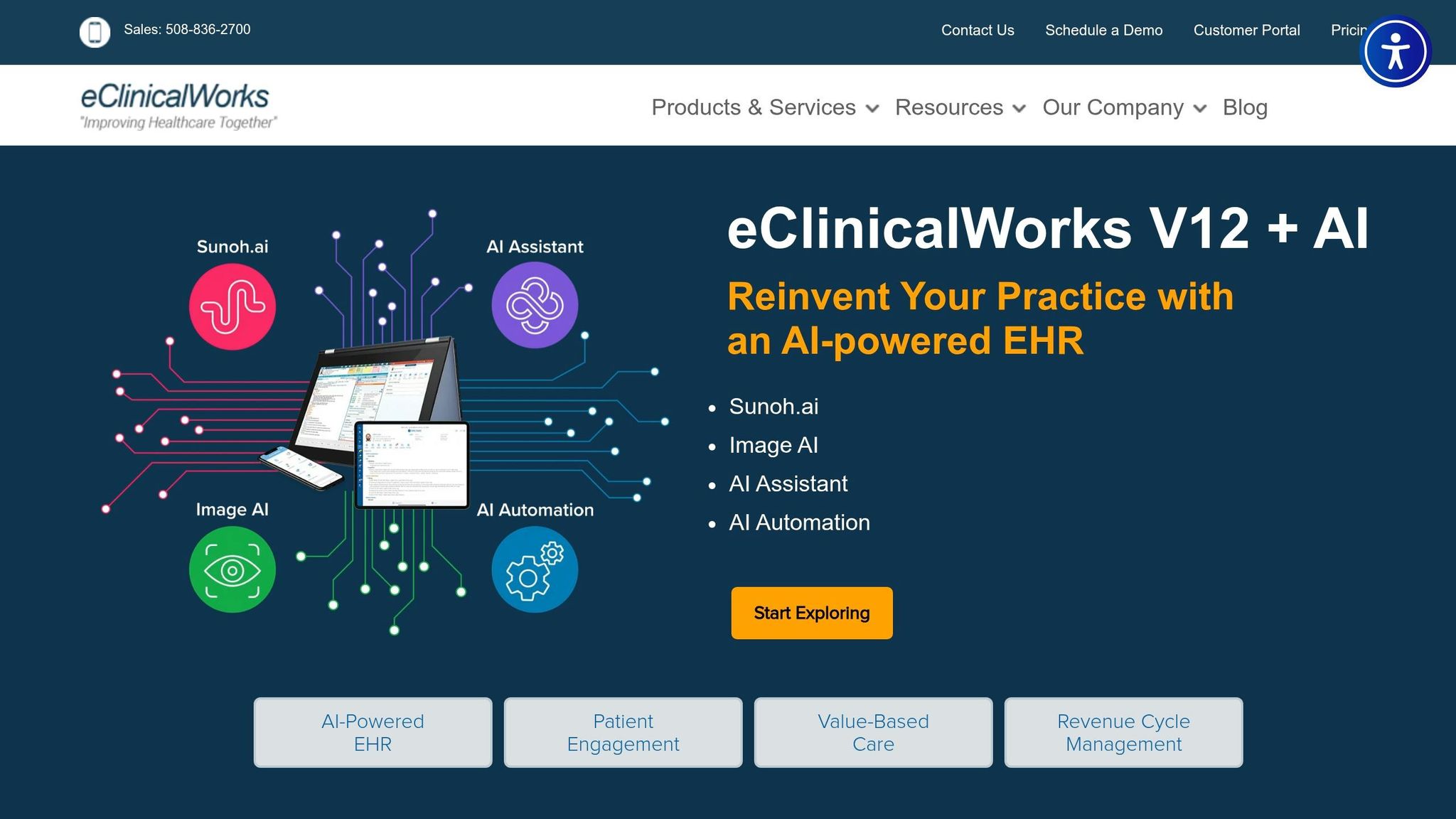
eClinicalWorks is one of the biggest privately held ambulatory EHR platforms in the United States. It serves more than 180,000 physicians across 110,000+ facilities. That size gives it a lot of depth. But for urgent care teams, there’s a catch: getting the system to fit fast-moving visit flow often takes a lot of setup work.
Its clearest strength is AI-assisted charting. Its biggest drawback for urgent care is the amount of workflow configuration needed.
For urgent care, the main tradeoff is simple: speed now or setup first.
eClinicalWorks includes a real-time patient tracking board, which helps teams monitor patient flow as visits move through the clinic. But it doesn’t come with native urgent care templates, so practices usually need heavy configuration to make the system fit their day-to-day process.
That extra setup can slow implementation. Compared with urgent-care-native platforms, rollout usually takes 12 to 20 weeks, and users often report a steep learning curve.
This is where eClinicalWorks has a strong pitch.
Sunoh.ai turns visit conversations into structured draft notes, which can cut down on manual documentation. Eva helps clinicians pull up history and move through the EHR using natural language. In plain terms, the AI tools aim to reduce typing and help charts get closed faster.
In a 2025 survey, 90% of eClinicalWorks customers using AI tools reported efficiency gains, and more than 60% said they saved 1 to 4 hours per day on documentation.
eClinicalWorks offers a few pricing paths:
On the billing side, the platform supports batch claims, automated coding, denial tracking, and eligibility checks. That pricing model tends to work well for groups that want to keep billing control in-house instead of handing off the whole function.
eClinicalWorks does a solid job with record sharing across bigger networks.
Its PRISMA interoperability engine pulls records from Carequality and CommonWell, which helps staff build a better patient picture for walk-in visits. That matters in urgent care, where patients often show up with little context and expect quick treatment.
For operators managing multiple sites, the platform also includes centralized management, enterprise reporting, and a unified patient database.
| Area | Capability | Gap |
|---|---|---|
| Charting | Sunoh.ai ambient scribe; Eva AI assistant | Steep learning curve reported by users |
| AI/Coding | 90% of AI users report efficiency gains; more than 60% save 1 to 4 hours per day | Requires configuration to fit urgent care-specific workflows |
| Billing/RCM | Batch claims, automated coding, denial tracking, eligibility checks; 2.9% RCM option | Pricing is per provider or tied to collections |
| Interoperability | PRISMA engine; CommonWell and Carequality integration | Complex setup for teams without dedicated IT support |
| Scale | Centralized reporting; unified patient database | Implementation typically takes 12 to 20 weeks |
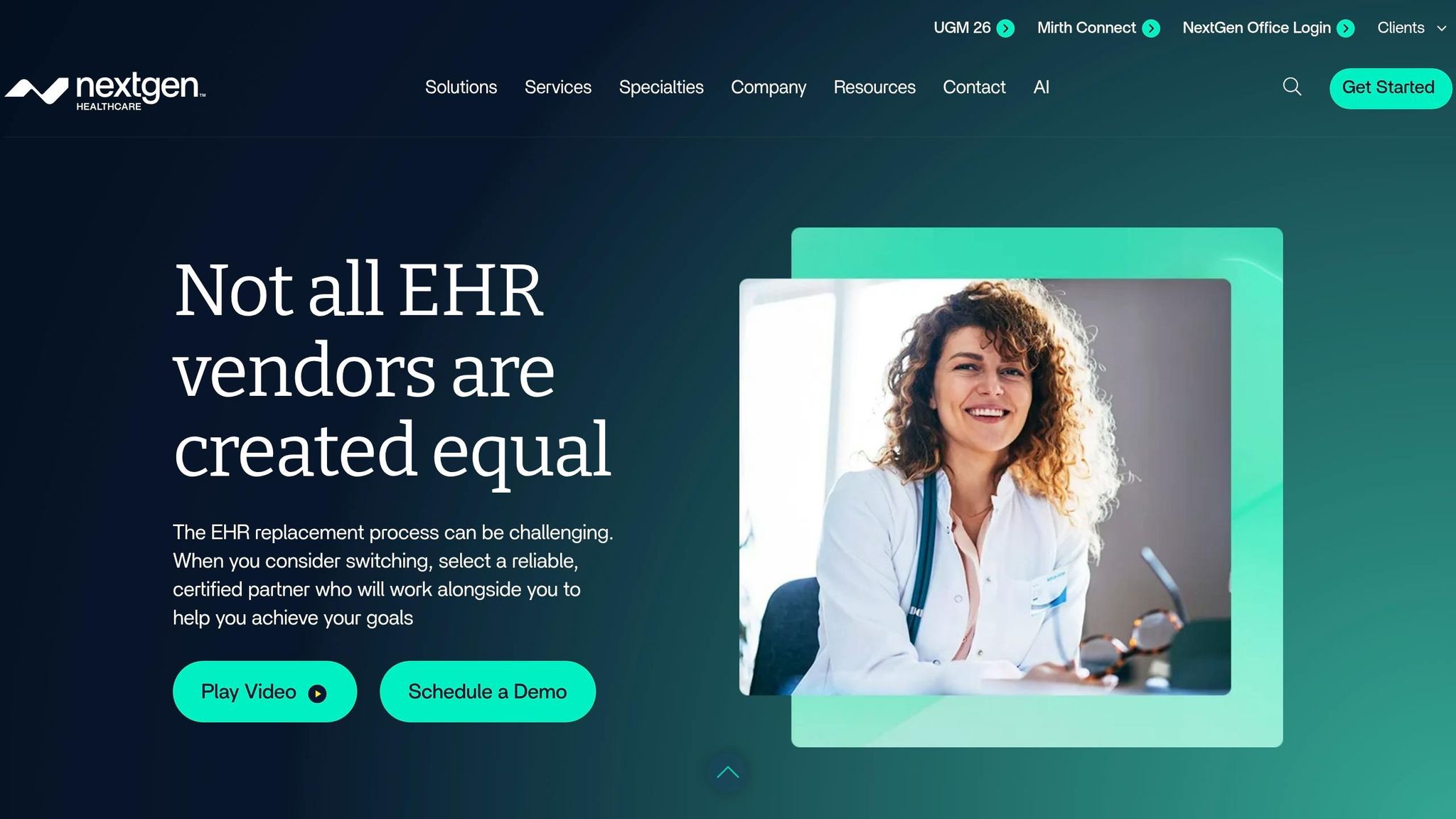
For groups that want more AI and stronger data exchange than Experity, NextGen Healthcare is a more configurable option, but it also asks more from the team during setup. The company serves 100,000+ providers across 8,000+ organizations and includes a dedicated urgent care build in its Enterprise suite.
NextGen’s NextGen Closed Loop experience includes digital registration, an automated wait-list, and real-time eligibility checks. Lab and imaging orders move through the system electronically, and results flow back into the chart to support same-day decisions.
The tradeoff is pretty clear: NextGen is not purpose-built for urgent care. Without solid configuration, busy shift workflows can feel slower than they should.
That heavier setup is tied to a stronger AI layer.
Ambient Assist turns patient-provider conversations into SOAP notes in under a minute with 90%+ accuracy. Providers using it report saving an average of 2.5 hours per day on documentation. It also supports Spanish-language conversations and can suggest ICD-10 codes, medications, and orders during charting.
In November 2025, NextGen added Nia, a voice command layer built to coordinate clinical, financial, and operational tasks.
Pricing starts at about $299 per provider per month and can go up to $700 for larger deployments. Implementation fees range from $5,000 to $50,000.
For urgent care groups, billing speed and clean claims matter just as much as note speed. NextGen includes automated claim scrubbing, E&M optimization, and support for CPT, ICD, HCPCS, and NDC coding. Syracuse Community Health Center reported a 20% increase in collections and a 10% drop in denials after implementing NextGen Enterprise.
This is one of NextGen’s stronger areas. Its Mirth Connect integration engine powers one-third of U.S. public HIEs. Through a Kno2 partnership, the platform connects more than 100,000 providers through TEFCA. KLAS rated NextGen 4.25/5 for EHR interoperability.
For multi-site operators, NextGen also supports centralized configuration and reporting across locations.
| Area | Capability | Gap |
|---|---|---|
| Charting | Ambient Assist SOAP notes in under a minute; 90%+ accuracy | Navigation complexity |
| AI/Coding | ICD-10 suggestions; Nia voice command layer | Requires configuration for urgent care-specific protocols |
| Billing/RCM | Automated claim scrubbing; E&M optimization; CPT/ICD/HCPCS/NDC support | Implementation fees can reach $50,000; pricing less predictable |
| Interoperability | Mirth Connect; TEFCA via Kno2 | Not purpose-built for urgent care; requires significant setup |
| Scale | Centralized configuration and reporting across locations | Not purpose-built for urgent care; requires significant setup |
Practice Velocity is now part of Experity. Here, the focus is on the legacy urgent-care workflow behind VelociDoc and whether that older setup still makes sense for a given site. Next to AI-heavy platforms, Practice Velocity feels like the classic urgent-care model: fast, familiar, and built for a tight use case.
Practice Velocity is known for complaint-driven logic and dynamic templates made for urgent care. That setup helps providers chart many common visits in under 60 seconds, with a reported 50% reduction in charting time. If your clinic runs on speed and repeatable visit types, that’s the appeal.
It also includes occupational medicine tools out of the box, including workers' compensation billing, employer reporting, and corporate account management.
There’s no native ambient AI here. Practice Velocity depends on template-based charting and coding automation instead.
The billing engine is geared toward urgent care E&M coding. It also includes automated eligibility verification and dedicated workers' compensation modules. For enterprise and multi-site groups, pricing requires a custom quote.
The same choices that make charting fast also narrow analytics and data exchange. Multi-site growth is one of the platform’s strong points, but analytics come up as a weak spot. Users say the module can be slow and limited when they need to track performance across sites.
Interoperability is also more narrow than what you’d see in broader ambulatory EHRs. The focus stays on urgent care lab and imaging connections, including electronic ordering and result receipt.
That leaves a pretty direct tradeoff: strong urgent-care billing and fast charting on one side, and a clear AI gap plus tighter cross-setting interoperability on the other.
| Area | Capability | Gap |
|---|---|---|
| Charting | Complaint-driven logic; 50% reduction in charting time; no native ambient AI | Template-based only; no generative AI yet |
| Billing/RCM | E&M coding engine; eligibility verification; workers' comp modules | Enterprise pricing requires a custom quote |
| Interoperability | Lab and imaging interfaces; electronic ordering and result receipt | Narrower cross-setting data exchange |
| Scale | Proven for large multi-site groups | Analytics depth and speed are common complaints |
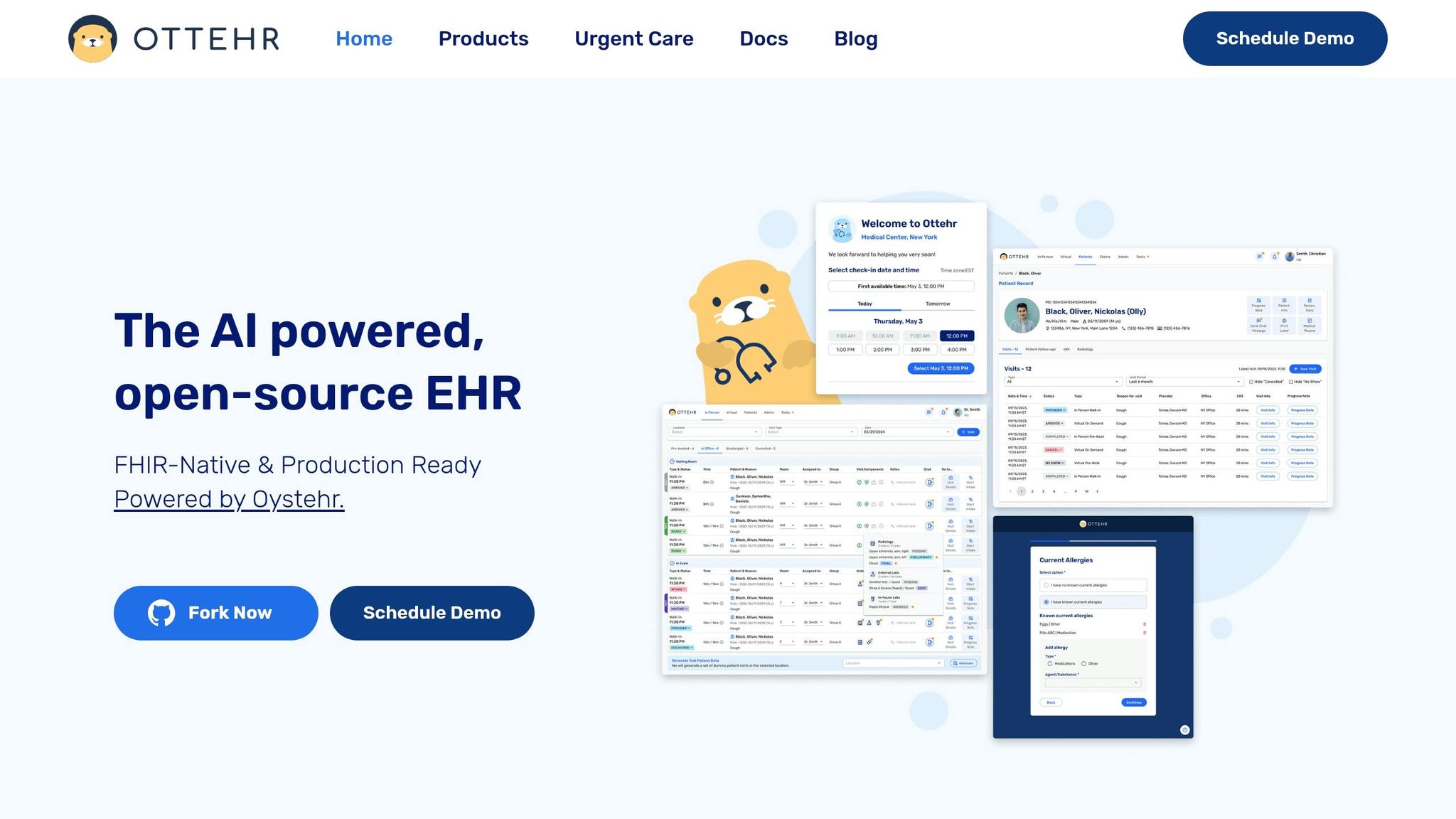
Ottehr is an AI-first, open-source EHR built for urgent care teams that need flexible workflows. In plain English, it brings intake, documentation, billing, and reporting into one setup that can be configured around how a clinic actually works. The goal is simple: cut down on documentation work, move billing along faster, and give operators more control as they grow.
Ottehr handles online intake and registration, charting, encounter documentation, scheduling, electronic paperwork, and a patient portal. One standout piece is its AI intake chatbot, which collects patient history before the provider enters the room. That means the patient story is already organized, so clinicians spend less time piecing together context at the start of the visit.
The AI layer starts at intake and continues through charting, so it isn't limited to one part of the visit.
Ottehr includes an ambient scribe for hands-free note capture, an AI intake chatbot that gathers history, and a coding assistant that automates charge capture. Put together, these tools cut manual typing from the first patient interaction all the way through claim submission.
Ottehr has three pricing tiers.
Ottehr is built on FHIR, which makes data exchange easier. It also supports cleaner multi-site reporting and simpler integration with outside systems. Because it's open-source, technical teams get more control over data and reporting.
That said, this setup does assume some in-house technical capacity. If a group doesn't have dedicated IT support, it may need extra help during implementation.
The next question is how this setup fits different urgent care operating models.
| Area | Capability |
|---|---|
| Charting | Ambient scribe, AI intake chatbot, customizable templates, tracking board |
| Billing/RCM | Claims submission, denial management, fee schedules, patient billing, reporting |
| Interoperability | FHIR-native, open-source, multi-site reporting |
| Pricing | Free / $349/provider/mo / $599/provider/mo |
No platform works for every urgent care setup. The right choice depends on clinic size, ownership, and the biggest pain point in daily operations. This table makes that trade-off easier to see at a glance.
Independent clinics with one location usually lean toward lower-cost systems.
Multi-site groups tend to care most about patient flow, steady reporting, and RCM that can scale without turning into a mess.
Hospital-affiliated centers usually put more weight on longitudinal records and clean data sharing across the health system.
Use these scenarios to cut down your shortlist fast.
| Platform | Main Advantages | Main Drawbacks | Best-Fit Organization | AI/RCM |
|---|---|---|---|---|
| Experity | Fast complaint-driven charting; native occupational medicine support | Less flexible outside urgent care; pricing not publicly listed | Multi-site urgent care groups with 3+ locations | Urgent-care-calibrated coding engine |
| Epic | Deep interoperability; strong longitudinal records | High cost; complex interface; slows walk-in throughput | Hospital-affiliated centers | AI-drafted notes and enterprise billing support |
| athenahealth | Strong RCM; 29,000+ billing rules; network-scale claim scrubbing | No native walk-in intake; percentage-based pricing can get expensive | Groups where billing performance is the top priority | Claims scrubbing and denial reduction |
| NextGen Healthcare | Leading ambient AI; mobile charting | Needs configuration for walk-in workflows | Mixed urgent care/primary care practices and burnout-prone teams | Ambient Assist saves up to 2.5 hours per day |
| eClinicalWorks | Feature-rich; deep customization | Steep learning curve; significant setup effort | Large ambulatory groups wanting flexibility | 90% of AI users report efficiency gains |
| Practice Velocity | Specialized urgent care coding; occupational medicine modules | Now fully integrated into Experity; legacy users may encounter system lags | Former Practice Velocity users transitioning to Experity | Billing expertise carried into the Experity platform |
A simple way to read this: if your clinic lives and dies by walk-in speed, platforms built around urgent care workflows usually make more sense. If the main issue is billing performance, a system like athenahealth stands out. And if your center sits inside a larger hospital network, Epic often wins on data continuity even if it adds friction at the front desk.
That’s the trade-off in plain English: some systems help you move patients through the door faster, while others do a better job tying records, billing, and system-wide reporting together.
There’s no single best Experity alternative for every urgent care operator. The right pick depends on the pressure point you need to fix first: workflow speed, billing results, interoperability, or documentation load. Once you’ve narrowed the field, test that short list against the busiest urgent care flow your team handles.
Put every finalist through a live demo and judge it on workflow speed, RCM strength, AI, and scalability. Keep the demo grounded in one visit type and one cost model so you can compare options without the usual sales fog. Ask each vendor to walk through patient arrival to chart close, show an occupational medicine visit, and provide a written total cost of ownership that includes implementation, training, and data migration. Before you sign, ask for two references from urgent care centers like yours.
For urgent care speed, Experity fits the high-volume, complaint-driven pace of on-demand care. Providers can finish charting for most urgent care visits in under 60 seconds, which helps move patients through the clinic faster.
athenaOne, eClinicalWorks, and NextGen Healthcare all offer strong AI-powered tools for documentation and billing. But Experity still stands out for facilities that want a purpose-built, out-of-the-box workflow for urgent care.
Look past the monthly subscription price and focus on the total cost of ownership. Pricing can look simple at first, but the way a vendor charges you changes the full bill over time. Compare the main models: a flat monthly fee per provider, a percentage of collected revenue, or a custom bundled agreement.
Then dig into the costs that don’t always show up on the pricing page. Downtime or slow performance during peak hours can eat into staff time and delay payments. It also helps to check whether billing, charting, and intake live in one suite, since that can cut overhead and trim the need for extra tools.
The biggest factor is keeping patient throughput high with an electronic medical record platform built for the fast, walk-in nature of urgent care.
To scale well, you also need one unified platform. That means centralized scheduling, real-time room tracking, integrated revenue cycle management, and strong reporting so clinical and administrative work stays consistent across every location.

Tell us what you need and we'll get back to you soon.