
Compare Experity vs. AI-native, open EHRs that cut charting time, reduce coding errors, and streamline urgent care workflows.
Urgent care EHRs are evolving fast, with AI leading the charge. While 60% of clinics use Experity, many are exploring alternatives to fix major issues like unanswered calls (50%), data entry overload, and medical coding errors (17%). Platforms like Ottehr and Experity now offer AI tools that simplify workflows, improve accuracy, and save time.
| Feature | Ottehr | Experity |
|---|---|---|
| AI Tools | Ambient scribe, HPI chatbot | AI Scribe, Insurance Matching |
| Customization | Open-source, highly flexible | Pre-built templates |
| Pricing | Free to $599/provider/month | Quote-based, starts at $2.20/user/month |
| Support | 24/7, fast bug fixes | 24/7, slower response reported |
Your choice depends on whether you value customization and affordability (Ottehr) or proven systems and scalability (Experity). Both aim to simplify urgent care workflows with AI.

Ottehr vs Experity: Urgent Care EHR Comparison Chart
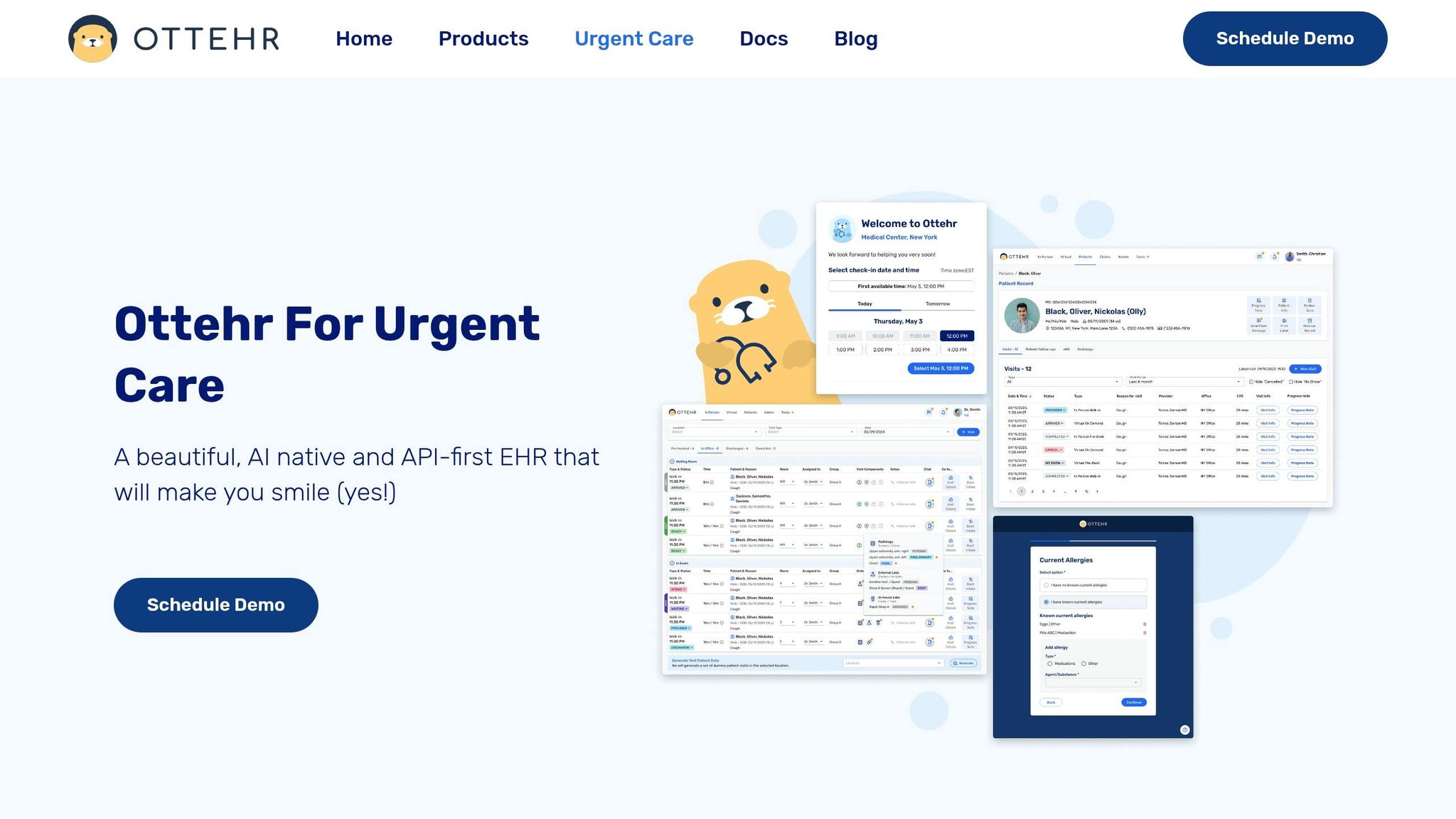
Ottehr is an AI-driven, open-source, FHIR-native EHR platform tailored specifically for urgent care settings. With over 1,000,000 urgent care visits already managed through the platform, it’s designed to handle millions of patient visits each month. Unlike older systems, Ottehr uses an API-first approach, allowing clinics to fully adapt workflows to their unique needs.
Ottehr comes packed with AI tools aimed at reducing administrative workload and giving providers more time to focus on patients. Here’s what it offers:
Mordechai Raskas, Chief Medical Information Officer at PM Pediatric Care, praised the platform, saying:
"Oystehr made it possible to build a no-compromises, urgent care EHR."
Ottehr’s open-source, headless architecture lets practices customize screens, workflows, and even the underlying code to suit their specific requirements. This level of flexibility stands in stark contrast to traditional EHRs, which often force users into rigid systems. Its FHIR-native design ensures smooth data exchange with other healthcare systems and third-party applications.
Every deployment includes dedicated engineering hours to help practices create their ideal EHR setup. According to the platform, this approach reduces the time and cost of building a custom EHR by 95%.
Ottehr’s pricing structure is designed to accommodate practices of all sizes, offering three tiers:
Additional costs include a payment processing fee of 2.9% + $0.30 per transaction and an optional EPCS feature for $20 per provider per month.
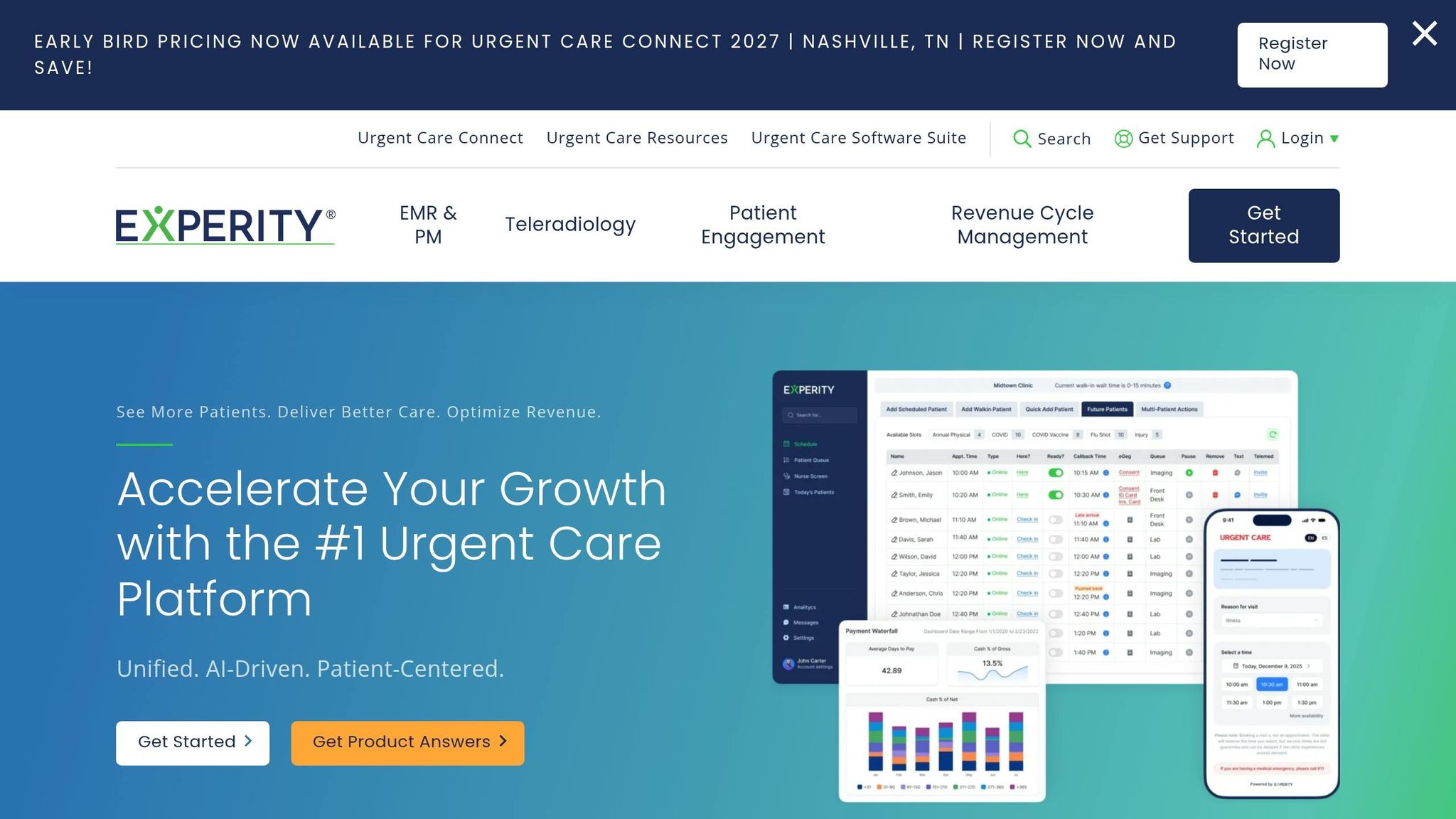
Experity has firmly established itself as a major force in the urgent care EHR market, serving nearly half of all clinics in the United States. While newer platforms like Otter are making waves, Experity continues to evolve its offerings, investing over $50 million in product development to launch its next-generation EMR/PM system. Over the past three years, the platform has processed more than 200 million patient visits, showcasing its extensive reach. Dr. David Stern, Experity's CEO, explains the platform's purpose:
"Adaptability is one of urgent care's greatest strengths, and this new core operating system is designed to support clinics as they navigate higher visit volumes, new revenue streams and expanded offerings without sacrificing quality of care."
Experity integrates AI tools to simplify and optimize urgent care operations. One standout is its AI Scribe, which converts patient encounters into structured notes for accurate coding. Mercy Urgent Care reported a 50% reduction in provider charting time thanks to this feature, enabling faster room turnover and reducing patient throughput time to about 35 minutes.
Another tool, the Care Agent, acts as an automated assistant for tasks like scheduling, insurance verification, follow-ups, lab result delivery, and payment processing. The platform also includes AI Insurance Matching, which uses card capture technology during online registration to extract details from driver's licenses and insurance cards. This feature automatically identifies the correct payer based on historical claims, helping reduce denials. Additionally, an AI-driven ticketing system reviews patient feedback and assigns follow-up tasks for clinic managers to address complaints.
Experity stands out by offering customization options to suit diverse clinic needs. Clinics can design tailored clinical templates for specific urgent care scenarios. The platform is Drummond Group Certified for Meaningful Use, ensuring compliance with federal standards for electronic health information exchange. It also supports electronic lab interfaces, automating the transfer of lab results into patient charts and eliminating the need for manual data entry.
The system integrates seamlessly with tools like teleradiology, business intelligence platforms, and patient engagement solutions, reducing data silos across practices. With complaint-driven templates, providers can chart 90% of patient visits in under two minutes, a feature praised by Andrea Malik Roe, President and Co-Founder of CRH Healthcare:
"In an urgent care setting where most of it is episodic and speed and efficiency are important to core tenants of our business, the Experity software solution delivers that in spades."
Experity uses a flexible, quote-based pricing model tailored to each clinic's size, features, and customization needs. Pricing reportedly starts at $2.20 per user per month, with overall costs varying depending on scale and selected features. Clinics can choose between two implementation packages: a Basic Package with self-serve setup and digital training resources, or a Premium Package that includes hands-on support and personalized training from an implementation team.
As a cloud-based solution, Experity is designed to grow alongside clinics, whether they are single-location practices or large-scale operations. It standardizes workflows and offers real-time visibility across multiple sites. The platform's scalability has earned it a 90% client experience rating in the 2025 Black Book Research report, as well as a #1 ranking among urgent care EHR systems. With a 4.1/5 rating from 56 user reviews on SoftwareFinder, Experity continues to align with the industry's move toward AI-driven efficiency and enhanced patient engagement.
The comparison between Ottehr and Experity highlights a broader trend: the integration of AI to streamline urgent care workflows. Ottehr is designed as an AI-native, API-first platform built on open-source FHIR standards. In contrast, Experity offers a comprehensive EMR/PM/RCM suite, featuring templates that allow providers to chart 90% of visits in under two minutes. Let’s break down how these platforms differ across key areas like AI features, pricing, customization, data handling, and support.
AI Capabilities focus on distinct aspects. Ottehr prioritizes clinical documentation with tools like ambient scribing, HPI chatbots, and coding assistance, all aimed at reducing the time providers spend on charting. On the other hand, Experity concentrates its AI efforts on diagnostic imaging, boasting a 99.9% accuracy rate and a 21-minute turnaround time for routine reads.
Pricing structures also vary. Ottehr adopts a transparent, usage-based pricing model. Meanwhile, Experity uses a per-user pricing system that starts at $2.20 per user per month.
Customization offers a clear trade-off. Ottehr’s architecture allows for extensive workflow modifications, making it highly adaptable to specific needs. Experity, while offering customizable templates and business intelligence dashboards, operates within a more rigid framework that limits flexibility outside standard urgent care workflows. As Mordechai Raskas from PM Pediatric Care shared about Ottehr:
"Our new behavioral health intake application, built on OystEHR, allowed us to build a solution that is customized for our use including scheduling, insurance validation, and direct integration with our eClinicalWorks EHR".
Data Access is another area of distinction. Ottehr ensures providers always have access to a complete copy of EHR data through FHIR APIs. In contrast, Experity users have reported difficulties extracting historical data and occasional delays in data updates.
Support availability is comparable, with both platforms offering 24/7 assistance. However, some Experity users have noted slower response times, while Ottehr claims to address bugs within minutes to hours.
Choosing between Ottehr and Experity comes down to your clinic's specific needs and priorities. Experity provides an all-in-one EMR, PM, and RCM system with standardized workflows, allowing providers to document 90% of visits in under two minutes. It’s a practical option for clinics that prioritize native teleradiology, hands-on implementation support, and built-in workflows tailored for high-volume, episodic care.
On the other hand, Ottehr takes a different approach with its AI-native, API-first platform built on open-source FHIR standards. It stands out for offering advanced AI tools - like an ambient scribe and an HPI chatbot - at no cost through its free tier. With transparent pricing ranging from free to $599 per provider per month for full revenue cycle management, Ottehr appeals to clinics exploring AI workflows or seeking a highly customizable system.
For budget-conscious practices, Ottehr’s free AI tier could be a game-changer. Meanwhile, well-established clinics focused on operational efficiency and patient satisfaction might lean toward Experity, which features AI-powered patient feedback tools and specialized startup consulting.
If your clinic has in-house engineering resources, Ottehr’s open-source, white-label architecture could be a strong advantage. However, for those who value standardized workflows and a track record of success - backed by Experity’s 4.4/5-star rating from 474 users - Experity may be the better match.
As AI continues to reshape urgent care EHRs, the decision ultimately depends on whether your clinic prioritizes proven stability or cutting-edge adaptability in its systems.
When moving on from Experity, focus on choosing an EHR tailored specifically for urgent care needs. Seek out systems with AI-powered tools that enhance clinical efficiency, streamline patient engagement, and automate workflows. Features like virtual assistants, automated documentation, and coding support can significantly cut down on administrative burdens. Additionally, prioritize platforms that offer easy onboarding, flexible customization, and robust implementation support to ensure a smooth transition and meet the fast-paced demands of urgent care settings.
AI scribes help cut down the time spent on charting by automating documentation during patient visits. Using ambient AI technology, they listen to conversations and pick up on clinical details in real time. This data is then used to create structured notes that are directly integrated into the EHR. By reducing manual data entry, providers can dedicate more attention to their patients. On top of that, AI scribes can detect key information and automatically fill in charts, simplifying workflows and saving providers a significant amount of time.
EHR data migration and integration can feel like navigating a maze - it’s intricate and demands meticulous attention. The process involves transferring and combining data from one system to another, but challenges like incompatible data formats, security gaps, and potential workflow disruptions can make it tricky.
To get it right, preparation is key. This means putting time into data mapping, validation, and testing. These steps help ensure that the data remains accurate and usable after the transition. Strategic coordination is equally critical to reduce downtime and prevent costly mistakes.
When done thoughtfully, this process allows for a smooth transition, safeguarding both patient care and the revenue cycle.

Tell us what you need and we'll get back to you soon.