
AI EHRs convert mixed lab inputs into structured data, auto-route critical results, aid documentation and coding, and speed patient follow-up.
If lab results do not move from intake to review to patient follow-up without delay, urgent care visits slow down and missed callbacks become more likely. In this article, I’d sum it up like this: the best AI-powered EHR workflow turns mixed lab inputs into structured data, flags abnormal and critical results, routes work to staff, helps with notes and coding, shares results with patients, and keeps every step logged for HIPAA, CLIA, and Cures Act needs.
For me, the main takeaway is simple: lab result management is not just about receiving a result. It is about moving that result through a chain of steps that includes matching, structuring, routing, review, documentation, patient notice, and follow-up closure. If any one of those steps stalls, care can drift.
Here’s the short version:
What matters most is this: you want one visible workflow from result intake to patient action, not a pile of disconnected inboxes, files, and callbacks. That is the lens I’d use to read the rest of the piece.
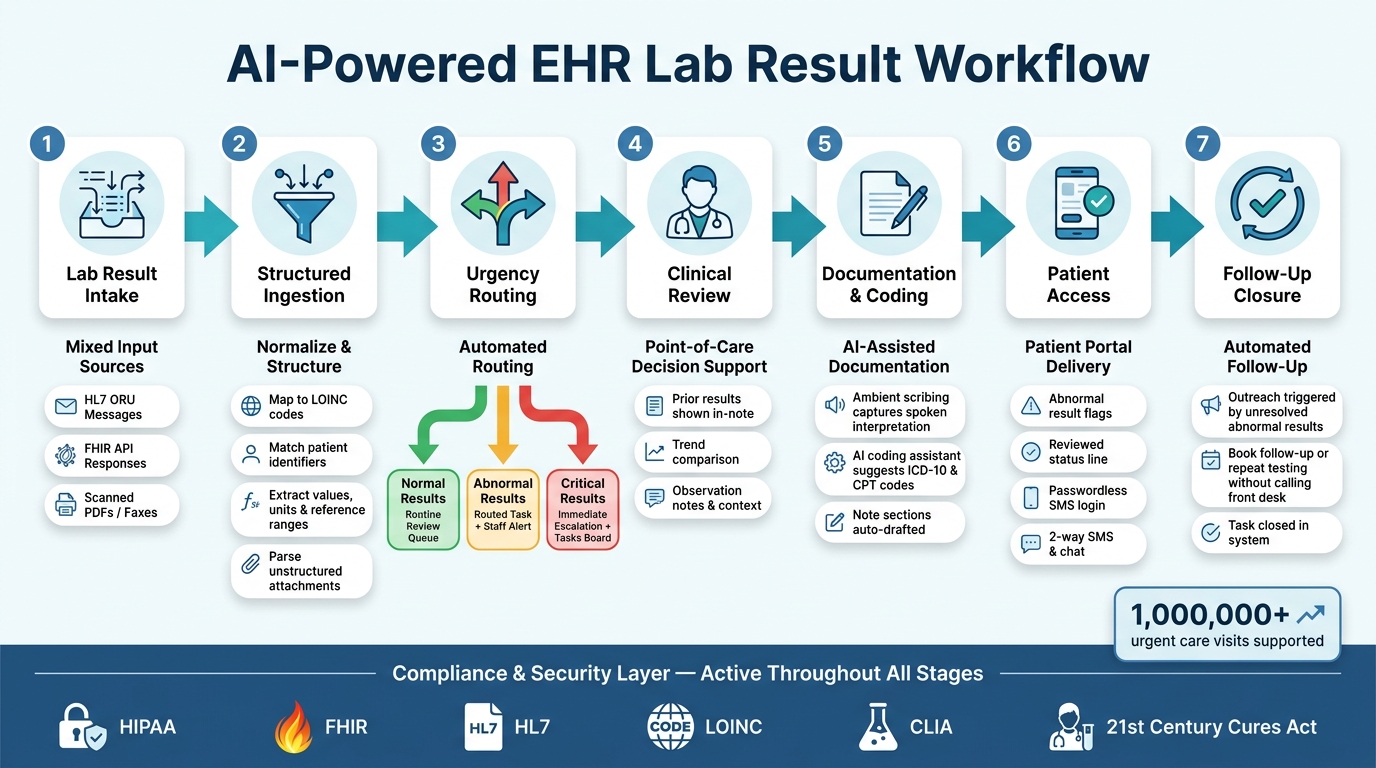
AI-Powered EHR Lab Result Workflow: From Intake to Patient Follow-Up
Urgent care clinics often get lab data from multiple places at once: HL7 ORU messages, FHIR API responses, and scanned faxes or PDF attachments. The hard part isn't just receiving those files. It's turning them into one clean, usable flow. That normalization step decides whether a clinician can review and act on a result before the visit ends.
The first job is to normalize every result into structured clinical data. FHIR-native AI EHRs do this in real time, not in batches. When a structured result comes in, the system maps it to LOINC-coded tests, patient identifiers, values, units, and reference ranges so staff can search it and review trends without digging through separate records.
Unstructured inputs, like scanned PDFs or faxed lab reports, need one more step. The system parses those attachments, pulls out the clinical data, and surfaces notes in the chart so key details don't get buried. If a lab sends a corrected result later, the system updates the order history so the chart shows the most current value.
After that, the EHR can sort results by urgency and send them where they need to go.
Once a result is structured, the system applies urgency logic. In day-to-day use, normal results move into routine review. Abnormal and critical results, on the other hand, turn into routed tasks with immediate escalation.
Ottehr routes results through its Orders Management System and Tasks Board. It also alerts staff when an external feed fails or when a result comes in outside the original order.
Once results are routed, the workflow moves into interpretation, documentation, and follow-up.
After routing, clinicians still have to interpret results, document what they found, and make sure nothing slips through the cracks. A centralized Tasks Board keeps pending results in plain sight and sends abnormal findings into the next step, whether that means repeat testing or patient outreach.
AI-native EHRs can show prior results right inside the note, so trend review happens on the spot. That makes it easier for clinicians to compare changes without bouncing between screens. With that context, they can decide if a patient is okay to leave, needs repeat testing, or should be escalated.
Observation notes add clinical context for interpretation. This supports clinical judgment rather than autonomous diagnosis. And once that context is in place, it can move straight into note drafting and coding with less back-and-forth.
Documentation is one of the biggest time drains in urgent care. Even after a result is reviewed, the provider still has to write the assessment, update the plan, and make sure billing codes line up with the level of care. That’s where AI tools help cut the lag.
Ambient scribing captures the provider's spoken interpretation of lab findings and auto-drafts the related note sections, which reduces manual post-visit entry. On the billing side, an AI coding assistant reviews documentation as it’s being created and suggests ICD-10 and CPT codes that match the lab findings.
In plain terms, ambient scribing helps providers finish notes faster, while AI coding support improves ICD-10 and CPT selection. That same workflow can also trigger follow-up tasks and patient outreach.
Once the result is documented, it should move into the patient portal and the follow-up queue. AI-powered EHRs don't just hold lab results. They help move those results from review to patient action.
Most patients can't make sense of raw lab values on their own. A good portal helps bridge that gap by showing the data alongside context: observation notes, abnormal result flags, and a reviewed status line so patients know a clinician has already seen the result. That can ease anxiety and cut down on unnecessary calls.
A few portal features make a big difference:
Access by itself isn't enough. Unresolved abnormal results still need active follow-up. Portal access does not guarantee follow-up completion. Outreach should be triggered from unresolved abnormal results so patients can book follow-up or repeat testing without calling the front desk. That keeps follow-up tied to the result itself instead of relying on a separate manual reminder.
After results are reviewed and shared, they still need to stay standardized, secure, and easy to track in the background.
Safe lab-result exchange depends on shared standards, tight access controls, and audit logs. In the US, FHIR, HL7, and LOINC help keep lab data consistent across systems.
Compliance adds another layer. HIPAA calls for encryption, role-based access controls (RBAC), and audit trails that track who accessed lab results and when. The 21st Century Cures Act says patients must get timely access to their results without information blocking. CLIA-related workflows should also document review of abnormal and critical results so follow-up can happen fast.
AI tools bring their own rules, too. Voice data should be encrypted and de-identified, coding changes should be logged, and patients should give consent before AI-driven history capture begins. The table below shows how each AI feature maps to its main compliance and security needs.
| AI Feature | Key Regulatory Considerations | Security Measures Needed |
|---|---|---|
| AI Ambient Scribe | HIPAA compliance for voice data processing; accuracy of the legal medical record | End-to-end encryption; immediate data de-identification |
| AI HPI Chatbot | Patient consent for AI-driven data collection; data integrity | Secure messaging protocols; role-based access |
| AI Coding Assistant | Compliance with False Claims Act and billing regulations | Detailed audit trails for all coding changes |
| Automated Result Routing | CLIA requirements for timely result review | Documented review logs and timestamps |
That’s where a FHIR-native workflow makes a big difference.
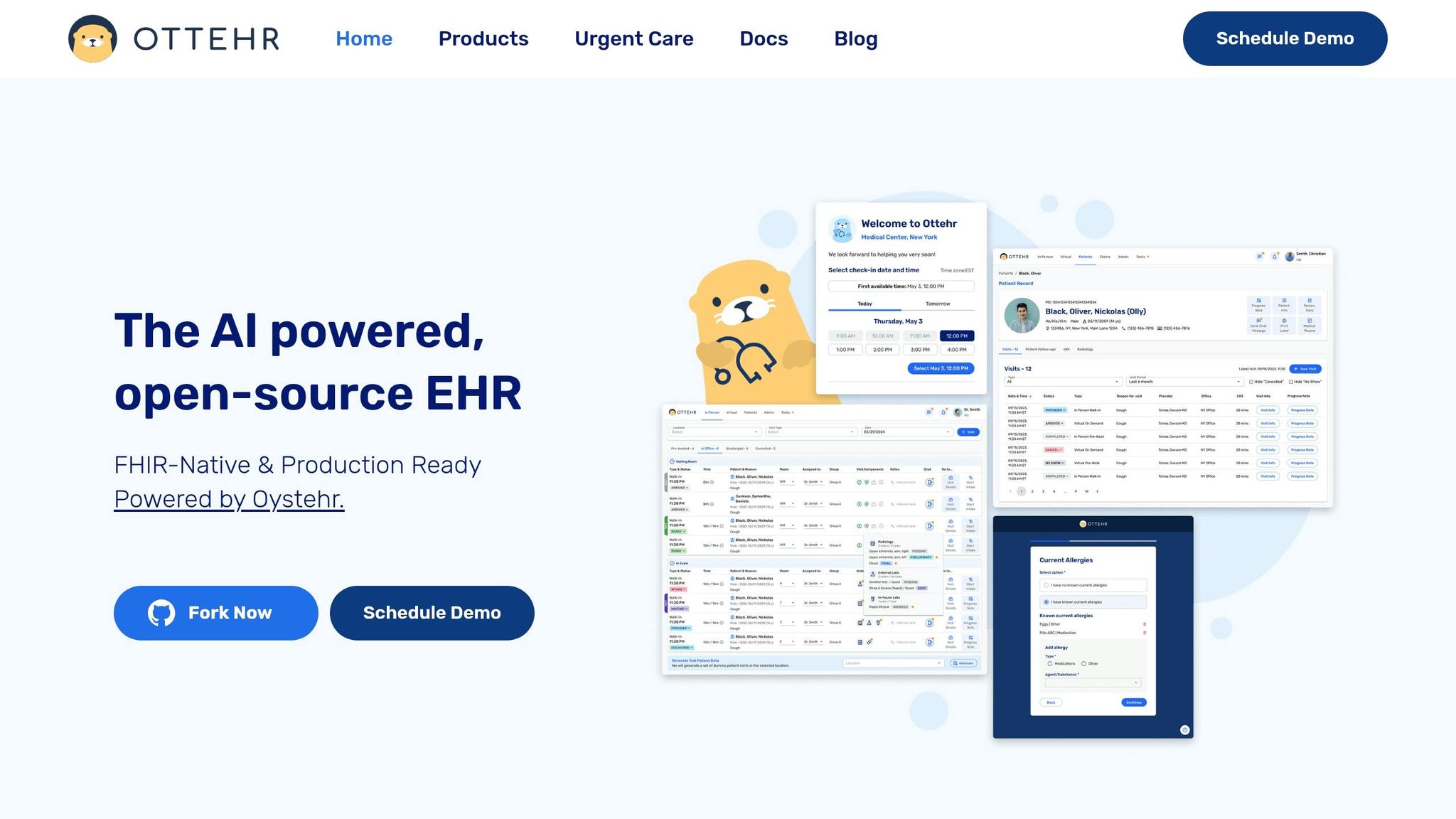
Ottehr is an AI-powered, open-source, FHIR-native EHR built for urgent care workflows. Because FHIR is its native data model, lab results can move into the chart as structured data without needing a separate translation layer.
The platform supports both in-house and external lab and imaging orders. Orders move through defined states, and the tracking, orders, and tasks boards show what is pending, resulted, or waiting for acknowledgment. In a busy urgent care setting, that kind of visibility matters. It helps teams stay on top of critical result workflows when the shift gets hectic.
On the AI side, the AI ambient scribe records clinical context around a lab review in real time. The AI HPI and medical history chatbot brings forward relevant history before the provider walks into the room. And the AI coding assistant helps make sure the visit and related diagnostics are documented clearly for billing. Because the platform is open source, teams can also customize routing logic, including escalation paths for critical results.
Start with structured ingestion. If an EHR can't turn PDFs, attachments, and notes into structured lab data, routing, decision support, and follow-up will break down fast. That step has to happen first.
After that, focus on the features that matter most: automated routing for normal, abnormal, and critical results; point-of-care decision support; a patient portal that explains results and prompts follow-up; and FHIR-native architecture for clean lab-data flow.
Compliance and security also need to be part of the workflow from day one, with HIPAA-aligned access controls built in from the start.
In urgent care, this becomes even more important when shifts get hectic and results are still pending. Real-time visibility into pending and completed orders helps teams avoid missing critical results during busy shifts. Platforms that bring a visits tracking board, an orders management system, and a tasks board together in one place give staff the coordination layer they need.
The best AI-powered EHRs cut manual work for providers and make the next steps easier for patients to understand. That's the clearest sign the system is doing its job: faster action from providers and clearer follow-up for patients.
AI-powered EHRs help cut missed lab follow-ups by taking routine work off staff members’ plates. They can send alerts when new results come in and handle data processing in the background, which saves time and lowers the odds that something gets overlooked.
They also support 24/7 patient portals and chatbots, so patients can check their results whenever it works for them. By making communication and admin follow-up more efficient, AI helps keep results from slipping through the cracks.
Yes. AI-powered EHRs like Ottehr can handle lab results sent as PDF attachments and place them in the patient’s record.
They can also add those attachments as extra pages to generated result PDFs. On top of that, they support the mapping and review of unsolicited lab results, which helps keep diagnostic documentation in one place and easy to access.
Clinics should look for EHR workflows that connect lab orders and results in real time. That helps teams move from testing to diagnosis and treatment with less delay. It also cuts staff workload through automated alerts and data handling.
Prioritize:

Tell us what you need and we'll get back to you soon.